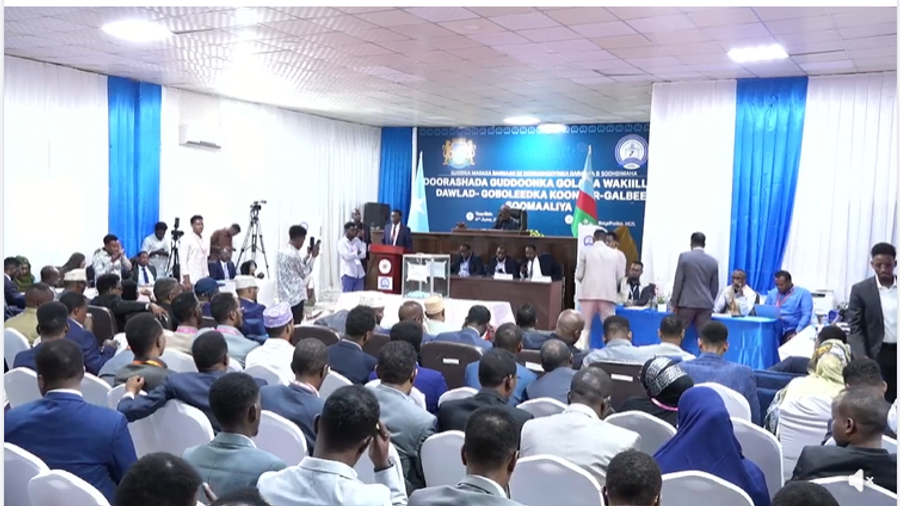
Wednesday, June 10, 2026 (Baidoa Online) -Somalia’s opposition groups, which have consistently criticized the federal government’s election agenda and opposed what they describe as term-extension efforts by Villa Somalia, have remained largely silent regarding the presidential election taking place today in South West State.
The election, being held in Baidoa, is widely viewed as a significant political test case for the federal government’s broader electoral strategy. The process is expected to result in the election of a candidate strongly backed by Villa Somalia, namely Speaker of the House of the People, Aden Mohamed Nur (Aden Madoobe).
Political observers argue that the electoral model being implemented in South West State could serve as a blueprint for similar processes in other federal member states, particularly Galmudug and Hirshabelle, where political tensions over leadership transitions and electoral arrangements have been growing.
The apparent silence of opposition leaders has raised questions among analysts, especially given their vocal criticism of federal government policies in recent months. Critics contend that the opposition’s reluctance to challenge the South West election may inadvertently strengthen President Hassan Sheikh Mohamud’s political position and provide momentum for the federal government’s plans in other regional states.
Some analysts note that parts of the opposition had previously supported the extension of South West President Abdiaziz Hassan Mohamed (Laftagareen), a move that was itself controversial and criticized by rival political actors. Today, however, opposition groups appear unwilling to openly align themselves with any faction involved in the Baidoa contest, likely seeking to avoid political risks while preserving future strategic alliances.
A similar pattern was observed during recent political disputes in Galmudug, where opposition figures largely refrained from taking sides despite ongoing disagreements among competing political camps. Observers suggest that this cautious approach may ultimately benefit Villa Somalia by reducing organized resistance to its preferred electoral framework.
The South West State election is being closely watched across Somalia, as its outcome and conduct are expected to influence future political developments in other federal member states and shape the national debate over electoral reforms and federal-state relations.
According to the electoral schedule, the 95 members of the South West State Parliament are expected to elect a new regional president today. The process has been criticized by some political stakeholders who argue that it has been structured in a manner that favors Aden Madoobe, allegations that supporters of the election reject.
The outcome of the Baidoa vote is likely to have significant implications for Somalia’s evolving political landscape as the country continues to debate the future of its electoral system and federal governance model.