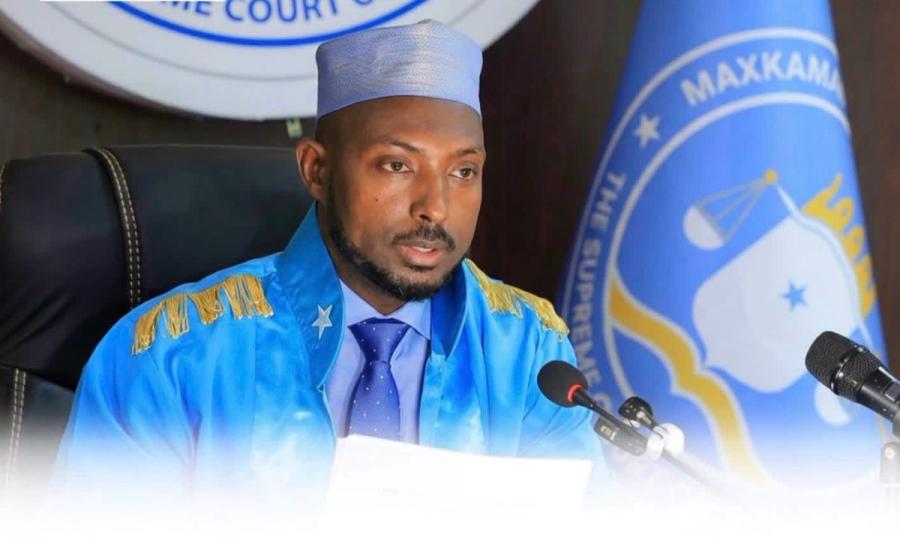
MOGADISHU, Somalia, November 5, 2026 — Somalia’s Supreme Court chairman, Baashe Yusuf Ahmed, rejected his dismissal as “null and void” before armed personnel reportedly entered the court building and removed him, escalating a confrontation over presidential authority, judicial independence and disputed constitutional amendments.
The armed personnel reportedly entered the premises while Baashe was addressing journalists following his rejection of President Hassan Sheikh Mohamud’s decision to dismiss him. Phones were reportedly confiscated during the incident, disrupting coverage of his response to the leadership change.
Personnel involved in the operation were described as wearing markings associated with the Military Police and the National Intelligence and Security Agency, known as NISA. Their identities and the command responsible for the deployment remain unconfirmed.
The confrontation followed Mohamud’s November 4 announcement removing Baashe and appointing Ibrahim Idle Suleiman as his replacement. The presidency presented the decision as part of judicial reforms, while the Supreme Court challenged both its justification and constitutional basis.
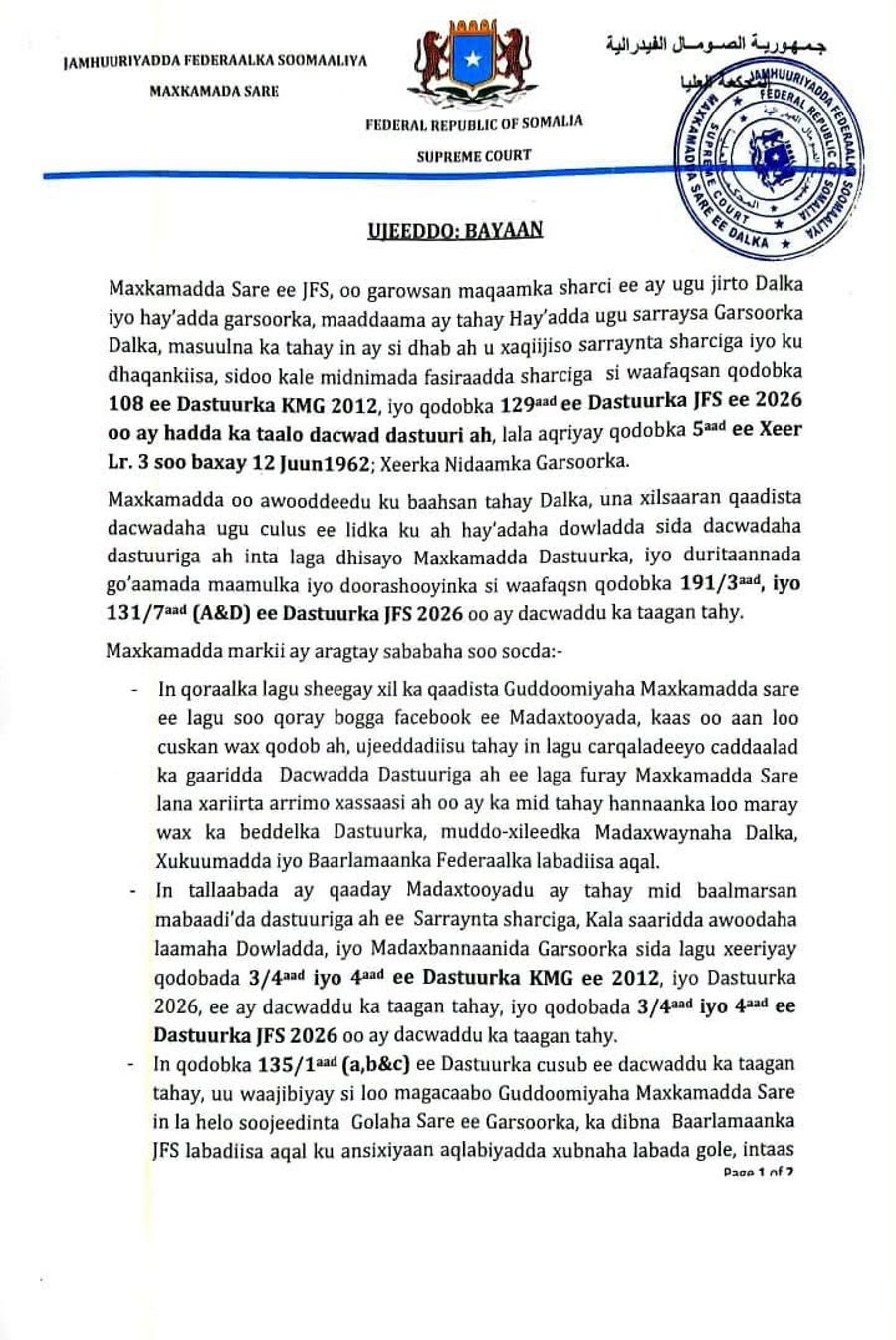
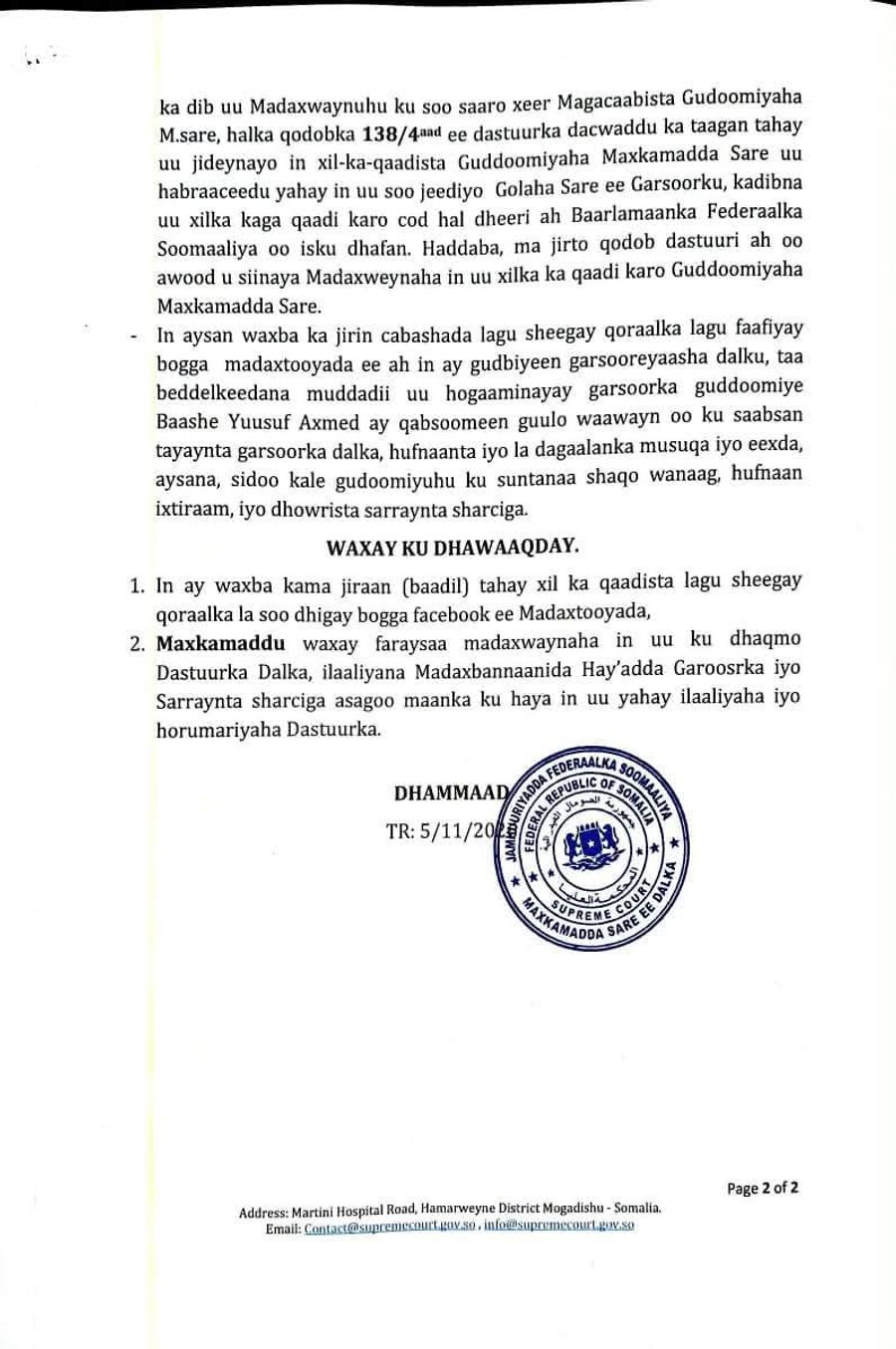
In a statement dated November 5, the Supreme Court declared the dismissal invalid, arguing that the president lacked constitutional authority to remove its chairman unilaterally.
The court maintained that dismissal requires a recommendation from the Judicial Service Commission and approval by a two-thirds majority of both houses of the Federal Parliament sitting jointly. It said the president’s authority to appoint a Supreme Court chairman does not give him unrestricted power to remove the officeholder.
The statement also questioned the constitutional provisions invoked to justify the decision, noting that the disputed amendments were themselves the subject of proceedings before the Supreme Court.
That objection places the confrontation at the intersection of two legal disputes: the validity of the constitutional amendments and the procedures governing the removal of the country’s highest judicial official.
The court’s position is that the executive cannot rely on contested constitutional changes to dismiss its chairman while a challenge to those changes remains before it. Whether the dismissal followed a lawful process remains central to the disagreement between the presidency and the court.
The Supreme Court also rejected allegations that complaints from judges had prompted Baashe’s removal. It defended his leadership, crediting him with improvements in judicial standards, transparency and efforts to combat corruption and favouritism.
The statement called on Mohamud to respect the Constitution, safeguard judicial independence and uphold the rule of law. It stressed the president’s responsibility to protect constitutional institutions and observe the legal procedures governing their operation.
The dismissal comes amid a broader political confrontation over changes to Somalia’s constitutional and electoral framework.
Former President Sharif Sheikh Ahmed submitted a petition in October seeking to invalidate amendments to the provisional Constitution and decisions arising from them. The petition challenges the procedures used to adopt the changes and questions the legal foundation of the associated electoral framework.
The pending case has placed the Supreme Court at the centre of a dispute with potentially significant consequences for the government’s political programme. A ruling against the amendments could affect decisions and arrangements established under the revised framework.
Allegations that Baashe’s dismissal was intended to prevent an anticipated ruling against the amendments have added to the controversy. However, a direct connection between the pending judgment and the president’s decision has not been independently established.
The presidency has attributed the leadership change to complaints concerning the administration of justice, rather than the constitutional petition.
In announcing the replacement, the presidency said judges, judicial employees and legal professionals had raised concerns about transparency and fairness. Mohamud called for extensive reforms to ensure citizens could access a dependable justice system.
He also urged Suleiman to safeguard judicial independence, uphold the law and ensure equal treatment for all citizens.
However, the announcement did not identify the specific complaints against Baashe or explain whether disciplinary proceedings had taken place. It also did not set out how the dismissal satisfied the constitutional requirements subsequently cited by the Supreme Court.
Those unanswered questions have become a central part of the confrontation, alongside the competing claims over who has authority to determine the court’s leadership.
The reported entry of armed personnel has further complicated the transition. Their deployment while Baashe was addressing journalists raises questions about the purpose of the operation and the circumstances surrounding his removal from the premises.
It remains unclear who authorised the intervention, whether any formal order was presented and what happened to the phones reportedly confiscated inside the building.
The leadership dispute also leaves uncertainty over how the constitutional petition will proceed and whether the change at the top of the court will affect its consideration.
With Baashe rejecting his dismissal and the presidency naming a replacement, the confrontation has become a significant test of Somalia’s constitutional procedures and the relationship between the executive and judiciary. The unresolved legal challenge and reported security intervention have placed the independence of the Supreme Court under renewed scrutiny.