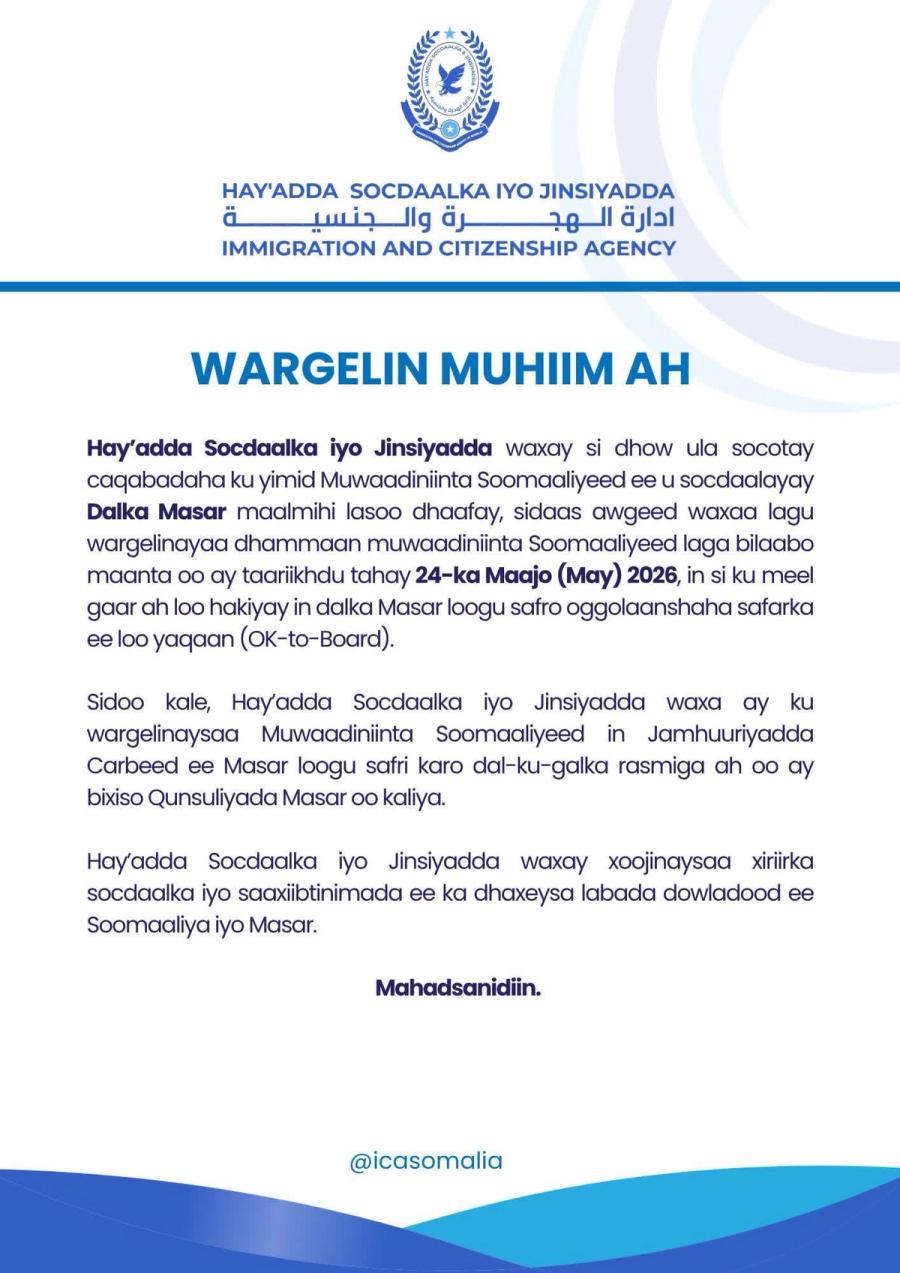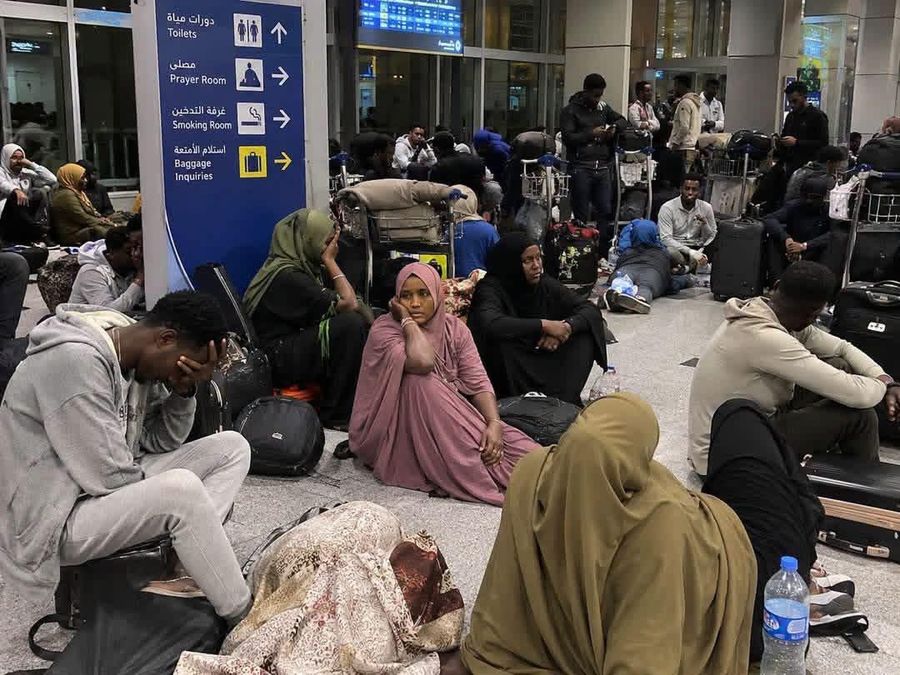
MOGADISHU, Somalia — May 24, 2026 —The Directorate of Immigration and Citizenship Service of Somalia has suspended the “OK-to-Board” travel authorization for passengers traveling to Egypt, following reports that Somali travelers were stranded at Cairo International Airport, according to an official statement.
The decision, which took effect on May 24, 2026, introduces new travel requirements for Somali citizens, who will now be required to obtain valid visas directly issued by Egyptian consular authorities before traveling.
According to the Directorate of Immigration and Citizenship Service, the suspension of the “OK-to-Board” system is a temporary measure introduced after incidents involving Somali passengers who were reportedly denied entry or left stranded upon arrival at Cairo International Airport.
Officials stated that the move is aimed at preventing further travel disruptions and ensuring that Somali citizens meet all entry requirements before departure.
The Directorate clarified that all Somali passengers traveling to Egypt must now obtain a valid visa issued exclusively by the Egyptian Consulate. Airlines are expected to comply with the updated requirements before allowing passengers to board flights bound for Egypt.
The immigration authority did not provide detailed figures on the number of affected passengers but confirmed that the decision follows “closely monitored travel challenges” involving Somali nationals.
Passenger Stranding Incident
According to reports circulating among affected families and travel agents, several Somali passengers arriving in Cairo were allegedly stranded at the airport due to visa-related complications.
However, independent verification of the total number of affected travelers and the specific circumstances has not been confirmed by Egyptian authorities or international aviation agencies.
The incident triggered concern among Somali families and travel operators, who urged authorities to intervene and clarify travel procedures between the two countries.
Government Response
The Directorate of Immigration and Citizenship Service said it is committed to ensuring “safe, orderly, and regulated travel procedures” for Somali citizens.
Officials emphasized that the suspension of the OK-to-Board system is part of efforts to strengthen compliance with international travel regulations and improve coordination with foreign diplomatic missions.
The Directorate also reiterated its commitment to maintaining strong bilateral relations between Somalia and the Arab Republic of Egypt, particularly in areas of education, travel, and diplomatic cooperation.
The “OK-to-Board” system is a pre-boarding clearance mechanism used in some international travel arrangements to verify passenger documentation before departure.
In Somalia, the system has been used in coordination with airlines and immigration authorities to reduce cases of document-related travel disruptions upon arrival in destination countries.
Egypt remains a key travel destination for Somali students, medical patients, and business travelers, making visa processing procedures a critical part of bilateral travel management.
According to immigration officials, airlines operating flights between Somalia and Egypt are expected to enforce the new visa verification requirement immediately.
Passengers without valid Egyptian visas issued by consular authorities will not be permitted to board flights under the updated rules.
Authorities are expected to continue monitoring passenger compliance and may issue further travel advisories depending on developments in coordination with Egyptian authorities.
The suspension of the OK-to-Board system marks a significant shift in Somalia’s travel management procedures with Egypt, affecting passengers, airlines, and travel agencies.
For Somali travelers, especially students and medical patients, stricter visa requirements may increase processing times and travel planning costs.
The decision also highlights the importance of stronger coordination between immigration authorities and foreign consulates to prevent airport-level travel disruptions.