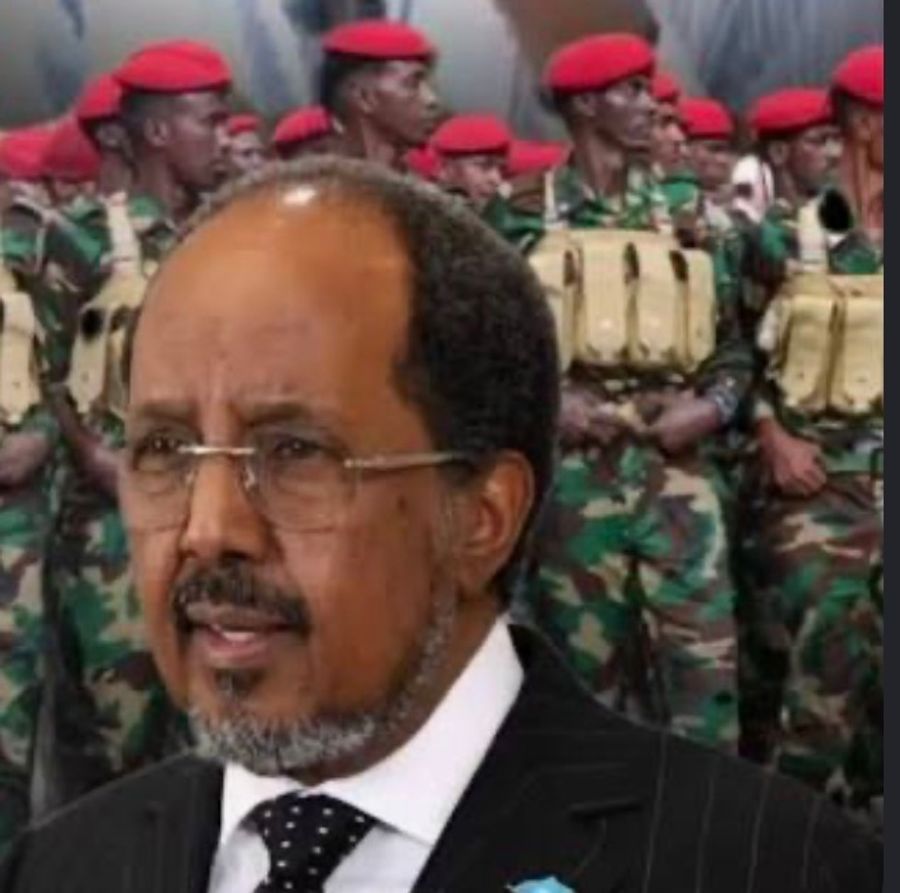
Wednesday, June 17, 2026 (Baidoa Online) -The Somali presidency has reportedly instructed military commanders to reopen and review the files of hundreds of soldiers previously classified as absent without leave (AWOL) or removed from active military records, according to multiple sources familiar with the matter.
Sources told local media that the order was recently conveyed to senior army officials, with the responsibility for implementing the process assigned to the Somali National Army’s Ground Forces Command. The initiative is said to have already triggered efforts to contact former servicemen who were removed from military rolls after prolonged absences from duty.
According to sources, many of the affected soldiers had complained for years about a lack of salaries, benefits, and official support, circumstances that allegedly contributed to their failure to continue reporting for duty. Several of those reportedly targeted by the review are former members of the Eritrea-trained Somali forces who returned to the country in recent years.
Sources claim the review process will not simply result in the reinstatement of personnel into their previous units. Instead, officials are reportedly considering reorganizing many of the returning soldiers into newly established special formations that would operate under separate command structures.
The development comes at a time of increasing political uncertainty in Somalia, with tensions continuing over electoral arrangements, constitutional disputes, and the country’s political transition. According to sources, some government critics believe the initiative is aimed at consolidating security forces loyal to the federal leadership ahead of a potentially contentious political period.
Sources further allege that plans are underway to establish additional elite military units with enhanced salaries, benefits, and operational privileges compared to regular army personnel. The reported proposal has already sparked debate among political observers and security analysts, some of whom argue that the creation of parallel security structures could raise concerns about military cohesion and institutional accountability.
Opposition figures and government critics have previously accused the administration of relying on specialized security formations outside conventional command channels, allegations that government officials have consistently denied.
Supporters of the reported initiative, however, argue that Somalia’s ongoing security challenges, including the fight against Al-Shabaab and the need to strengthen national defense capabilities, justify efforts to reorganize and expand specialized military units.
Neither the Office of the President nor the Ministry of Defence has publicly commented on the reports. Independent verification of several claims remains difficult, and the full scope of the alleged plan has not been officially disclosed.
If implemented, the reported review and reintegration process could represent one of the most significant personnel restructurings within the Somali National Army in recent years, with potential implications for both the country’s security architecture and its increasingly polarized political landscape.