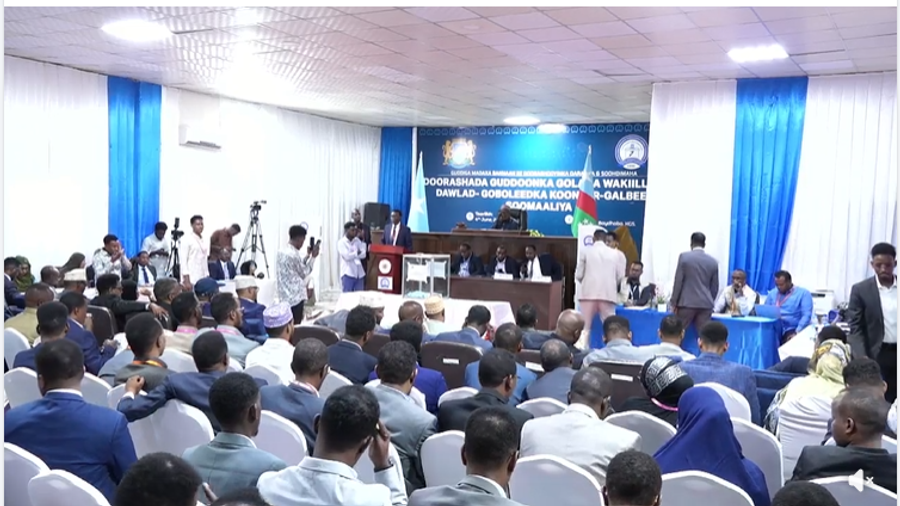
Tuesday, June 9, 2026 (Baidoa Online) -The South West State presidential election has entered a critical and highly contested phase, with opposition candidates raising serious concerns about the transparency, fairness, and credibility of the electoral process. While authorities have presented the election as part of Somalia’s transition toward a “one person, one vote” democratic system, critics argue that the presidential race is increasingly being viewed as predetermined, fueling political tensions across the state.
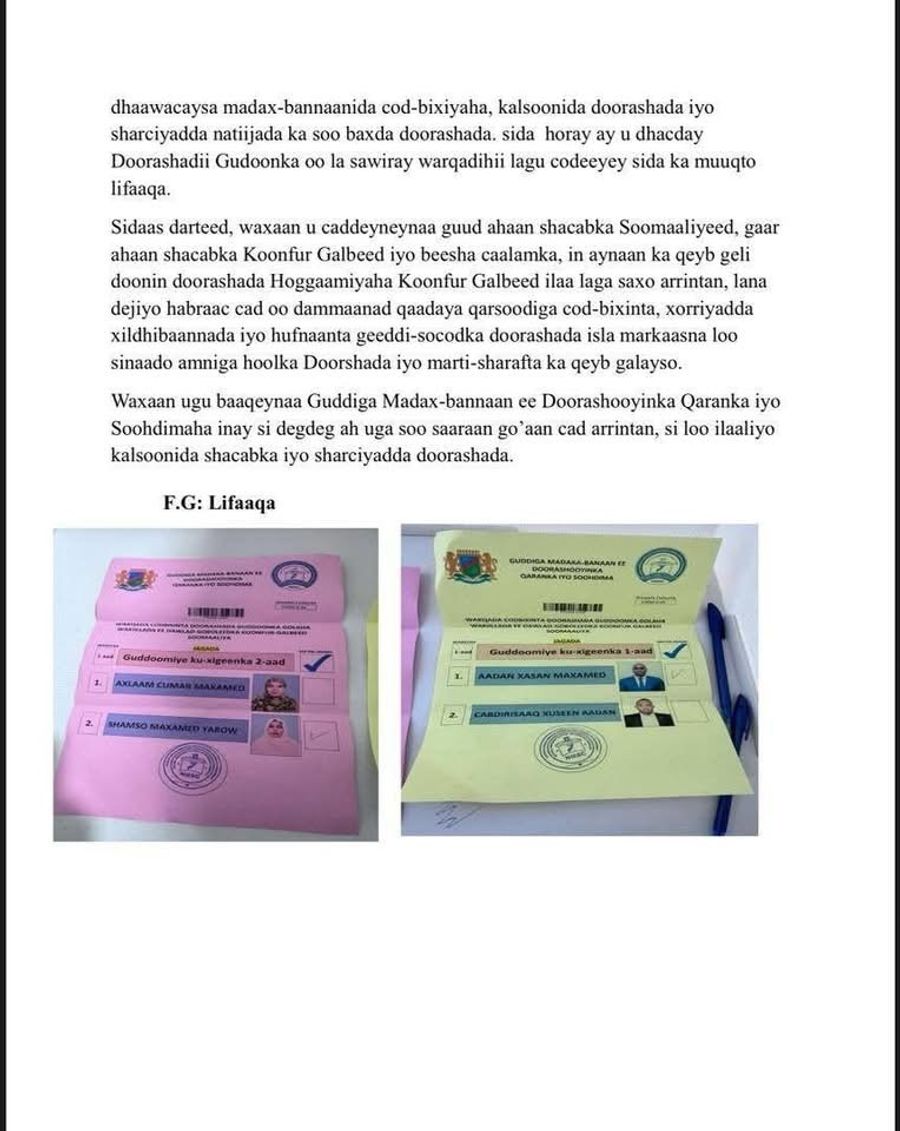
Opposition candidates remain firm on three key demands that they say are necessary to guarantee a free and fair election. The first is a complete ban on mobile phones inside the voting hall to prevent lawmakers from photographing their ballots, a practice they believe could facilitate vote-buying, intimidation, and external influence over voters. The second is for the election to be held in a neutral and secure venue protected by international peacekeeping forces, rather than in a location controlled by government security institutions, with voting taking place during daylight hours. The third demand is for Aden Mohamed Nur (Aden Madoobe) to step down from his position as Speaker of Somalia’s Federal Parliament before contesting the presidency of South West State.
According to opposition leaders, these concerns have not been adequately addressed, leading to growing distrust among candidates and their supporters. Political sources indicate that discussions between stakeholders have produced little progress, increasing tensions ahead of the scheduled vote.
A major point of contention is the continued role of Aden Madoobe as Speaker of the Federal Parliament while simultaneously seeking election as President of South West State. Opposition candidates argue that it is inappropriate for one of the country’s highest-ranking federal officials to remain in office while competing in a regional election. They maintain that doing so creates a conflict of interest and raises questions about the neutrality of federal institutions during the electoral process.
Former South West State President Sharif Hassan Sheikh Aden, who is among the candidates contesting the election, has been one of the most vocal critics of this arrangement. Sharif Hassan has repeatedly argued that Aden Madoobe should resign from the speakership before entering the race, insisting that all candidates should compete on equal footing. He contends that remaining Speaker while contesting the presidency gives Aden Madoobe political and institutional advantages that are unavailable to other candidates.
The controversy extends beyond procedural concerns. Opposition figures claim that despite the election being promoted as part of Somalia’s democratic transition, the presidency of South West State appears to have been politically reserved for Aden Madoobe. They argue that the electoral environment has been structured in a manner that overwhelmingly favors his candidacy, creating widespread perceptions that the outcome has already been decided before voting takes place.
Critics also point to the exclusion of former Somali Finance Minister Mohamed Aden Farkeeti from the race, arguing that his disqualification was politically motivated and linked to his opposition to the Federal Government. According to opposition leaders, barring one of the most prominent potential challengers has weakened political competition, narrowed voter choice, and raised serious questions about the credibility, inclusiveness, and legitimacy of the election.
The election has generated wider debate because it is being promoted as part of Somalia’s move toward a “one person, one vote” system, a reform widely viewed as a milestone in the country’s democratic development. However, opposition politicians argue that the presidential contest in South West State does not reflect the spirit of that reform. They contend that while authorities celebrate democratic progress, the race itself lacks the level playing field and political competition expected in a genuinely open electoral process.
The debate has also sparked broader constitutional discussions. Opposition politicians and legal observers contend that the spirit of Somalia’s 2012 Provisional Constitution emphasizes impartial governance, separation of powers, and equal political opportunity. They argue that allowing the Speaker of the Federal Parliament to remain in office while contesting a state presidency risks blurring the line between federal authority and regional politics, potentially undermining public confidence in democratic institutions. Critics further maintain that federal office holders seeking executive positions at the state level should relinquish their national responsibilities to avoid perceptions of undue influence and conflicts of interest.
Supporters of the electoral process reject claims that the outcome has been predetermined and maintain that the election is being conducted in accordance with established procedures. Nevertheless, opposition candidates insist that unresolved concerns over transparency, security arrangements, candidate eligibility, and institutional neutrality continue to undermine confidence in the process.
As the election date approaches, political tensions continue to rise. Opposition candidates warn that unless outstanding concerns are addressed, the legitimacy of the election may be challenged regardless of the final result. Many observers believe that reaching a political compromise before voting day will be essential to ensuring that the outcome is accepted by all stakeholders and contributes to stability in South West State rather than deepening existing political divisions.
𝐒𝐡𝐚𝐫𝐢𝐟 𝐇𝐚𝐬𝐬𝐚𝐧 𝐚𝐧𝐝 𝐉𝐚𝐰𝐚𝐫𝐢 𝐏𝐮𝐥𝐥 𝐎𝐮𝐭 𝐨𝐟 𝐒𝐨𝐮𝐭𝐡𝐰𝐞𝐬𝐭 𝐄𝐥𝐞𝐜𝐭𝐢𝐨𝐧, 𝐃𝐞𝐦𝐚𝐧𝐝 𝐄𝐥𝐞𝐜𝐭𝐨𝐫𝐚𝐥 𝐑𝐞𝐟𝐨𝐫𝐦𝐬
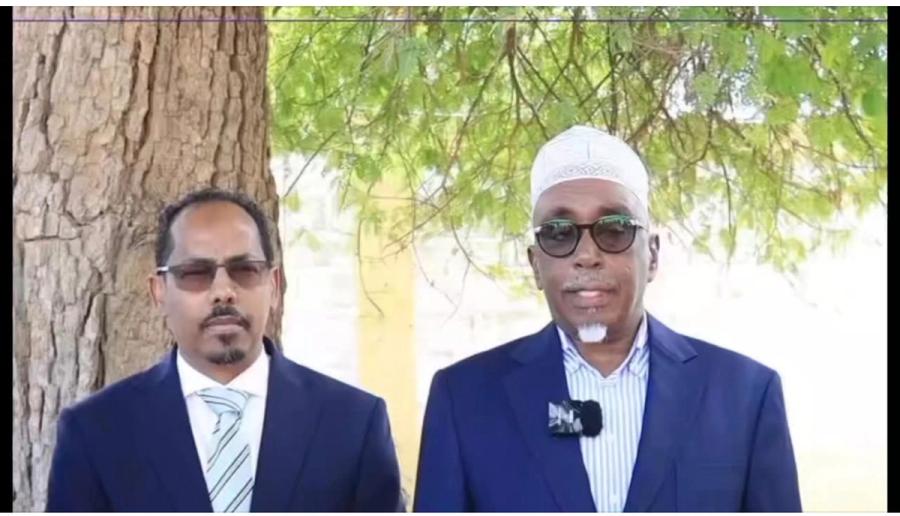
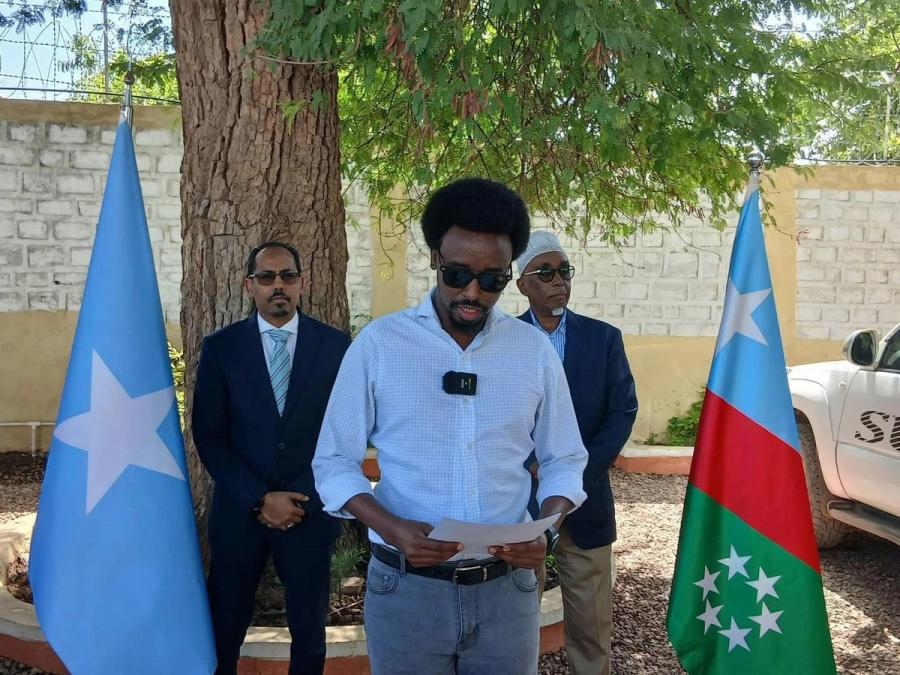
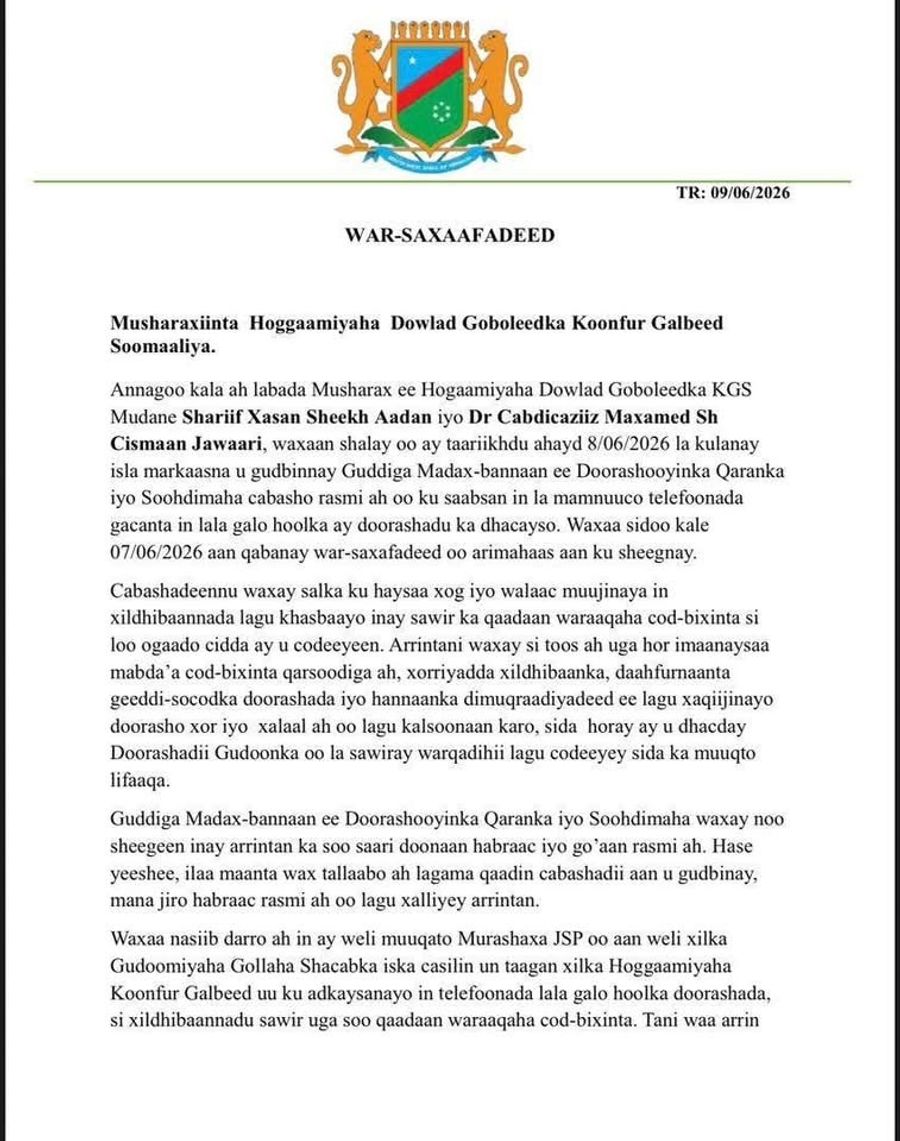
Two prominent presidential contenders in the Southwest State (KG) elections, Sharif Hassan Sheikh Aden and Mohamed Sheikh Osman Jawari, have announced their boycott of the electoral process in Baidoa, citing unresolved concerns over previously raised electoral grievances.
In a joint press briefing, the two candidates stated that they will not participate in the election unless the issues they submitted the previous day are adequately addressed. They emphasized that proceeding without corrective measures would undermine the credibility and fairness of the electoral process.
Meanwhile, reports circulating within political circles allege that the Federal Government of Somalia is supporting a “favored” or indirect candidate in the race, with claims that official credentials were quietly facilitated. These allegations have not been independently verified.
Observers warn that the growing distrust among key political actors could weaken confidence in the election outcome and further intensify political divisions in the region if not urgently addressed through dialogue and transparency measures.