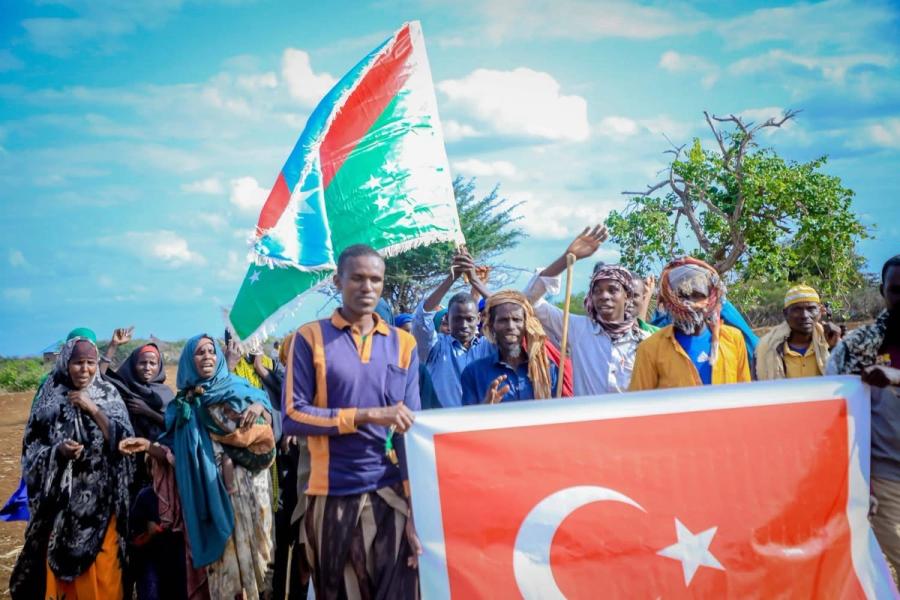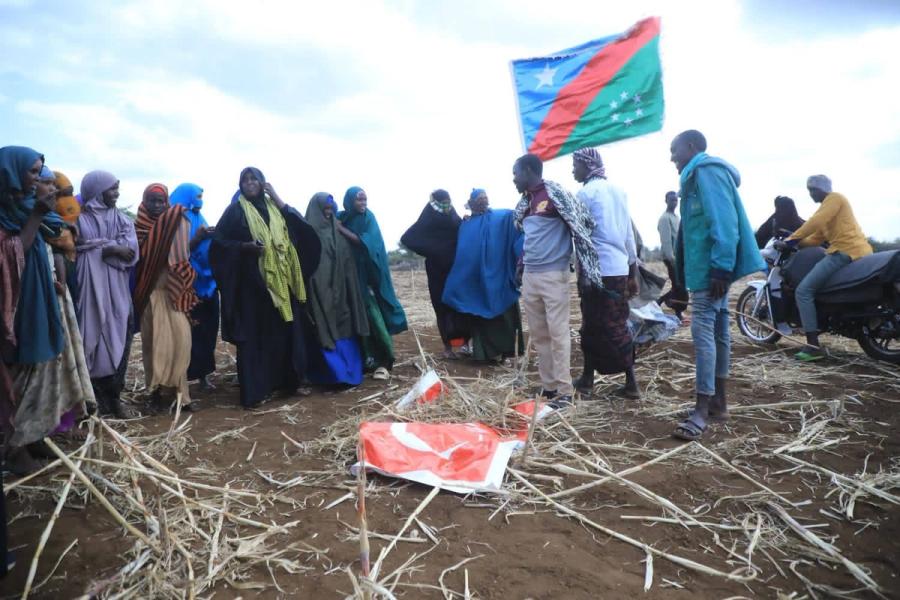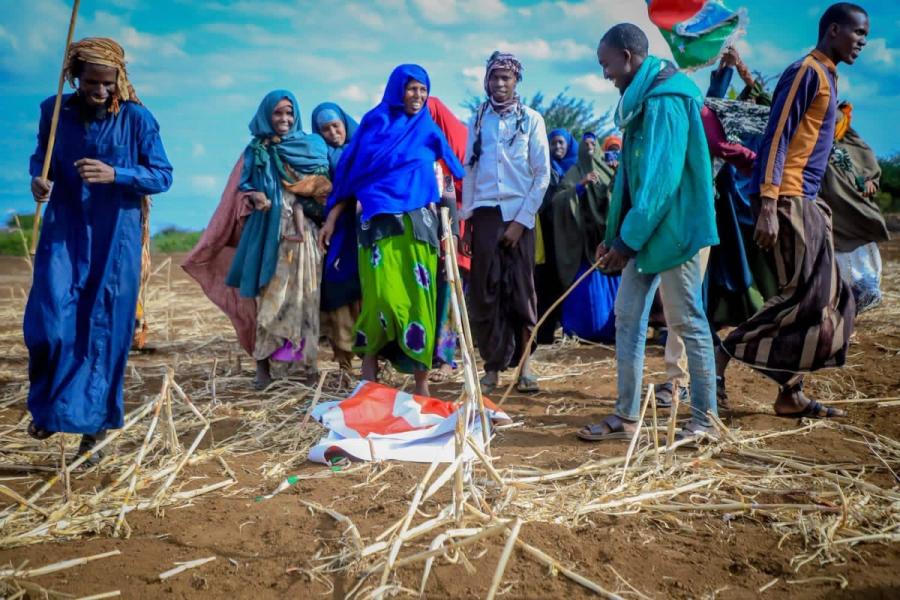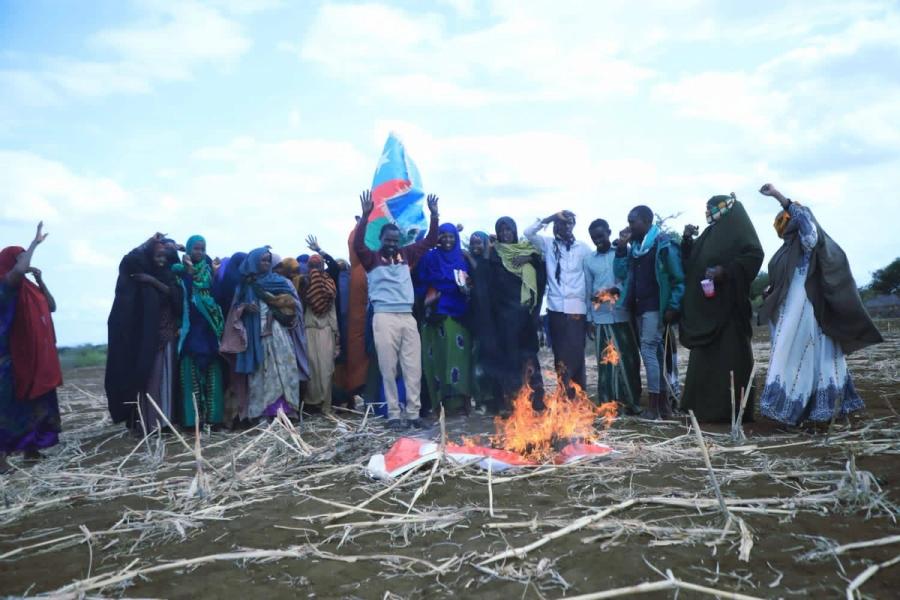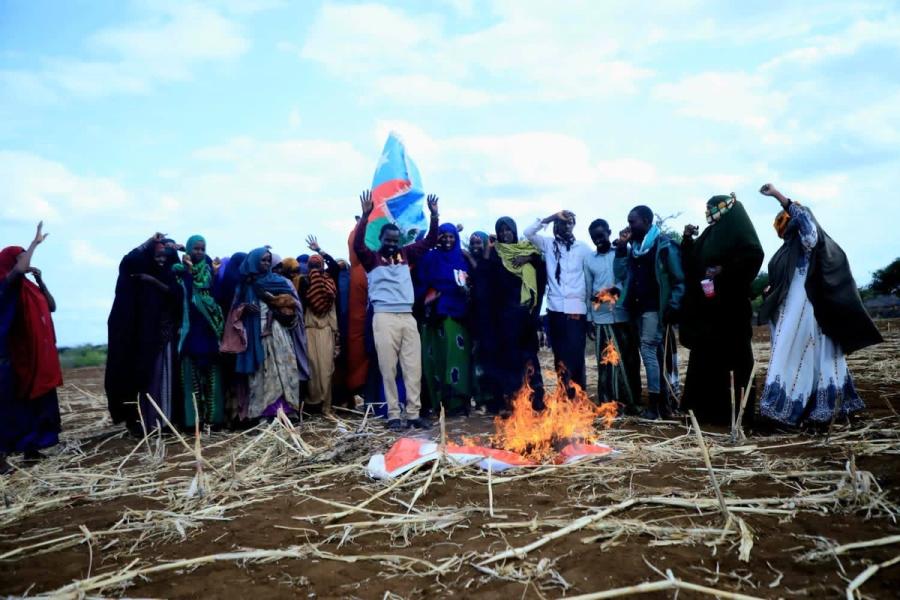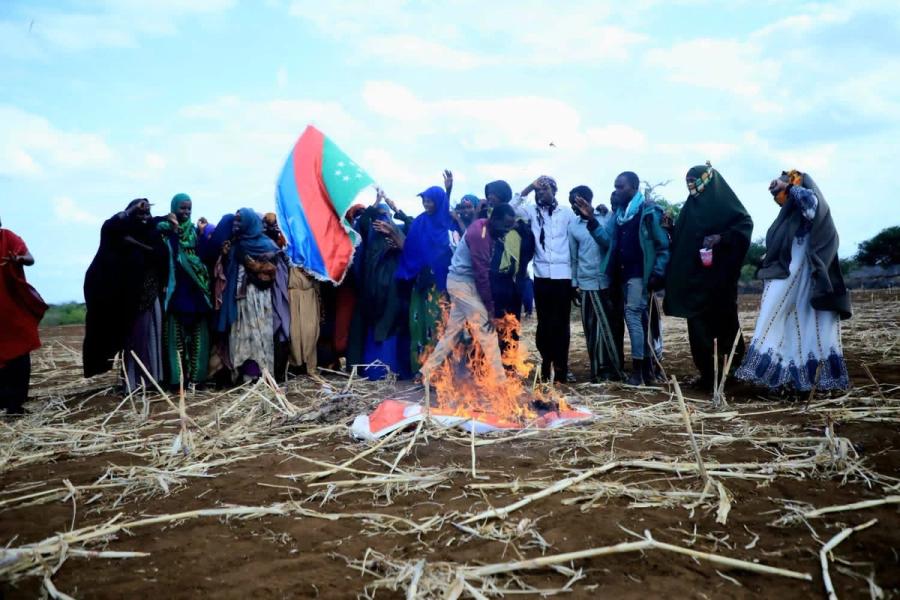
BAIDOA, Somalia — August 8, 2026 — Residents from villages surrounding Baidoa staged an anti-Turkey demonstration on Saturday, burning a Turkish flag as they protested recent airstrikes and accused Ankara and Somalia’s federal government of interfering in the political and security affairs of South West State.
The demonstration took place outside Baidoa, the capital of South West State, and involved residents from rural communities surrounding the city who said their areas had been affected by aerial operations in recent days.
Protesters openly condemned Turkey’s involvement in Somalia and set fire to a Turkish flag during the demonstration, a highly visible expression of opposition to Ankara’s perceived role in the escalating South West State dispute.
Local residents alleged that recent airstrikes struck villages and agricultural areas around Baidoa, damaging farmland and killing livestock belonging to rural families.
Some residents told Baidoa Online that farmers had suffered losses after the reported strikes, including damage to agricultural property and the deaths of animals.
Turkish authorities have not publicly confirmed carrying out the reported strikes, and there has been no independently verified evidence establishing who operated the aircraft involved.
The protesters also accused the federal government of President Hassan Sheikh Mohamud of interfering in South West State’s internal affairs and working alongside Turkey to support one side in the region’s political confrontation.
Rival South West Factions
The protest comes amid heightened tensions between rival political and military factions competing for influence in South West State.
Supporters of former South West State President Abdiaziz Hassan Mohamed “Laftagareen” have accused Turkey and the federal government of backing a rival faction associated with Sheikh Aden Mohamed Nur “Madobe.”
Those accusations have become part of a broader political dispute between Laftagareen’s camp and authorities supported by the federal government.
Laftagareen-aligned forces have established positions in areas on the outskirts of Baidoa. Officials and supporters associated with the faction have vowed to continue their campaign toward the regional capital.
They have portrayed their mobilization as resistance to what they describe as interference by the federal government and Turkey in South West State’s affairs.
Turkey has not publicly said it is supporting an individual South West State political faction. Ankara maintains extensive diplomatic, military and security relations with Somalia’s internationally recognized federal government.
Airstrikes and Civilian Concerns
The latest allegations have raised concerns among rural communities around Baidoa, where farming and livestock provide important sources of food and income.
Residents involved in Saturday’s demonstration said their opposition to the aerial operations was driven in part by the reported impact on farms and animals.
No independently verified casualty figures from the latest reported strikes were immediately available.
The absence of independently confirmed information about the aircraft and their operators has also complicated efforts to establish responsibility for the alleged damage.
Turkey has become one of Somalia’s most important security partners over the past decade. Ankara has trained Somali soldiers, supplied military equipment and supported the federal government as it confronts Al-Shabaab and other security threats.
Turkish-manufactured Bayraktar TB2 drones have previously been reported in Somalia’s counterterrorism operations.
Concerns over the civilian impact of drone warfare have surfaced before. Amnesty International said in 2024 that an investigation into two March 18 strikes in Lower Shabelle found evidence indicating that Turkish-manufactured MAM-L munitions delivered by Bayraktar TB2 drones had been used. Amnesty said it could not determine whether Turkish or Somali forces were operating the drones during those strikes.
The Somali government disputed allegations that its military deliberately targets civilians and has repeatedly said its operations are directed against Al-Shabaab.
Background to the South West Dispute
Political tensions in South West State have intensified as rival camps compete for political authority and control of security institutions.
The dispute has increasingly taken on a security dimension, with armed forces aligned with competing sides operating in and around Baidoa.
Laftagareen’s supporters have accused the federal government of seeking to determine South West State’s political future from Mogadishu. The federal government and its allies have defended federal involvement in regional affairs as part of efforts to maintain national institutions and security.
The growing confrontation comes as Somalia continues to face a wider political dispute over relations between the federal government and some Federal Member States.
Turkey’s perceived involvement has now become an additional source of controversy among sections of the population around Baidoa.
Saturday’s burning of the Turkish flag was a particularly strong public symbol of that anger, with demonstrators directing their protest not only against the reported airstrikes but also against what they described as Ankara’s intervention in the South West political crisis.
Attention is likely to focus on whether Turkish or Somali federal authorities respond to the accusations and whether further information emerges about the aircraft involved in the reported strikes.
Any continued military activity around Baidoa could increase pressure on rural communities, particularly if fighting or air operations affect farmland, livestock or civilian movement.
The presence of rival forces around the regional capital also raises the possibility of further confrontation unless the competing political sides reach an agreement.
The anti-Turkey demonstration signals that the South West State dispute is extending beyond competition between Somali political factions. The burning of Turkey’s flag suggests that at least some residents around Baidoa increasingly associate Ankara with the federal government’s role in the regional confrontation.
That could present a challenge for Turkey, which has built one of its strongest relationships in Africa with Somalia through security assistance, development projects, humanitarian aid and military training. Growing local hostility in areas affected by military operations could complicate that relationship if allegations of civilian harm remain unresolved.