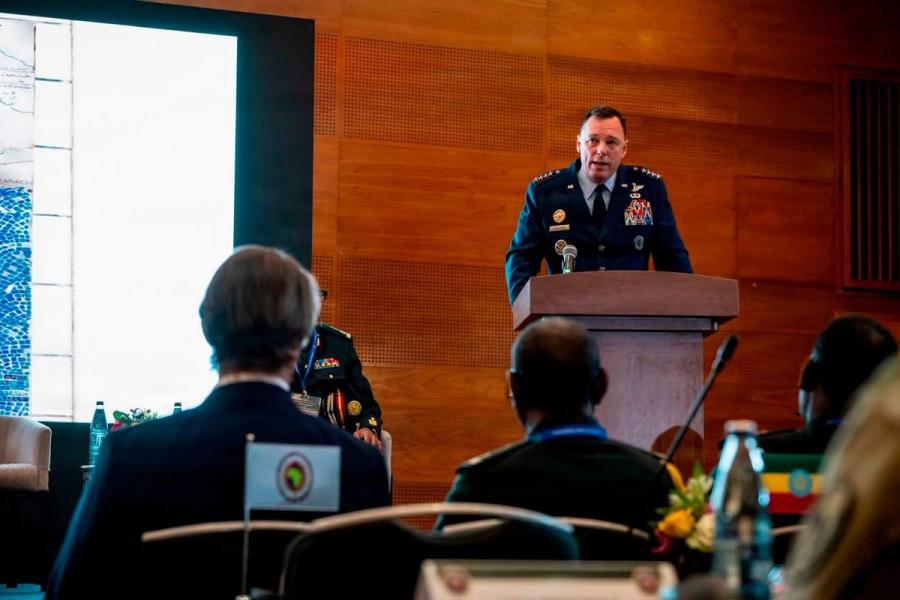
MOGADISHU, Somalia — July 28, 2026 —A high-level United States delegation made up of members of Congress and senior military officials from the U.S. Africa Command (AFRICOM) is scheduled to begin a multi-stop visit to Somalia’s regional administrations on Wednesday, in a trip expected to focus on security, regional consultations, and preparations for a major international conference on the future of the African Union Support and Stabilization Mission in Somalia (AUSSOM).
According to sources familiar with the visit, the 12-member delegation will travel to Kismayo in Jubaland before continuing to Garowe in Puntland and Hargeisa in Somaliland. The visit comes days before senior regional and international officials gather in Uganda for discussions expected to shape the next phase of international security support for Somalia.
Officials familiar with the preparations said the delegation includes lawmakers from the U.S. Congress alongside senior AFRICOM personnel responsible for overseeing American security cooperation across Africa.
Security sources said the delegation’s first stop will be Kismayo, where meetings are expected with Jubaland leaders before the team continues to Puntland and Somaliland.
According to officials, the visit has three primary objectives: assessing the current security situation across Somalia, briefing regional leaders on Washington’s evolving policy toward Somalia and the Horn of Africa, and consulting local administrations ahead of the upcoming AUSSOM conference in Kampala.
The consultations are expected to provide U.S. officials with updated assessments from regional administrations that continue to play significant roles in counterterrorism operations and stabilization efforts.
Although Somali federal authorities have not publicly commented on the visit, diplomatic and security sources described it as part of broader international engagement ahead of decisions expected on Somalia’s security transition.
Focus on the Kampala AUSSOM Conference
The visit comes ahead of a three-day high-level conference in Kampala that will be jointly led by the United States and the African Union.
According to officials familiar with the meeting, the conference will bring together heads of delegations, defence ministers, military commanders, and representatives from troop-contributing countries supporting the AUSSOM mission.
The gathering is expected to examine operational, financial, and political issues affecting the mission while discussing future security arrangements in Somalia.
Participants are also expected to review progress made since AUSSOM replaced the African Union Transition Mission in Somalia (ATMIS), as well as challenges facing ongoing stabilization operations against Al-Shabaab.
Diplomatic sources said consultations during the U.S. delegation’s regional tour are intended to inform discussions expected during the Kampala conference.
Regional Consultations
The inclusion of visits to Jubaland, Puntland, and Somaliland underscores Washington’s interest in hearing perspectives from regional administrations that play important roles in Somalia’s broader security architecture.
Regional authorities have frequently cooperated with international partners on counterterrorism operations, intelligence sharing, maritime security, and efforts to strengthen local security institutions.
Officials said discussions are expected to include regional security trends, cooperation against militant groups, and political developments affecting future security coordination.
Neither the U.S. Embassy in Mogadishu nor AFRICOM had publicly released details of the delegation’s itinerary at the time of publication.
The African Union Support and Stabilization Mission in Somalia officially succeeded ATMIS as the primary multinational security mission supporting Somalia’s federal government.
The mission continues to assist Somali security forces through joint military operations, protection of key infrastructure, logistical support, and capacity-building efforts aimed at enabling Somali forces to gradually assume greater security responsibilities.
However, AUSSOM has faced persistent challenges, including funding shortages, logistical constraints, force generation issues, and questions over long-term international financial commitments.
International partners, including the African Union, the United Nations, the United States, the European Union, and troop-contributing countries, have continued consultations on how to sustain the mission while advancing Somalia’s security transition.
According to diplomatic sources, financing mechanisms and operational planning remain among the most sensitive issues expected to dominate discussions during the Kampala conference.
Government Response
Somali federal authorities have yet to issue an official statement regarding the U.S. delegation’s regional tour or the upcoming Kampala consultations.
Regional administrations expected to host the delegation have also not publicly announced meeting agendas.
Officials familiar with the preparations said discussions are expected to remain focused on security cooperation and strategic planning rather than domestic political matters.
Following meetings in Kismayo, Garowe, and Hargeisa, the delegation is expected to participate in consultations linked to the Kampala conference, where African Union officials, U.S. representatives, and troop-contributing countries will discuss the future direction of AUSSOM.
Decisions emerging from the conference could influence the mission’s operational planning, funding arrangements, and international support framework during the coming months.
The visit highlights continued U.S. engagement in Somalia’s security sector at a time when international partners are reassessing long-term support for stabilization efforts. Direct consultations with regional administrations may provide Washington with a broader understanding of security conditions beyond Mogadishu.
The Kampala conference is expected to play a significant role in determining how AUSSOM will operate in the future. Discussions on funding, troop contributions, and strategic priorities could affect the mission’s ability to continue supporting Somali security forces against Al-Shabaab.
For Somalia’s regional administrations, the visit presents an opportunity to communicate their security priorities directly to senior U.S. policymakers and military officials. Their assessments could influence future international cooperation and assistance.