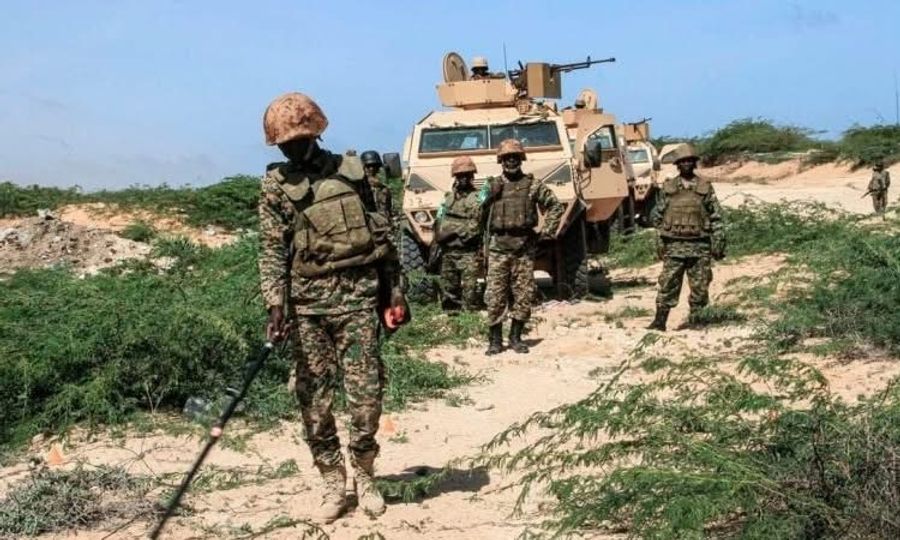
MOGADISHU, November 2, 2026 — Uganda has announced plans to withdraw all its troops from Somalia by the end of 2027, with the first group of soldiers deployed under bilateral arrangements already back in Uganda.
A press statement dated November 2 and shared by Colonel Chris Magezi, Uganda’s acting director of defence public information, confirms that the immediate withdrawal covers troops deployed through bilateral arrangements with Somalia’s Federal Government.
“The first cohort of troops under the phased withdrawal operation have already arrived back in Uganda,” the statement says.
The announcement establishes two separate timelines: bilateral troops are expected to complete their departure within days, while Ugandan personnel serving under the African Union Support and Stabilization Mission in Somalia, or AUSSOM, will withdraw gradually through the end of 2027.
Bilateral withdrawal to finish within days
According to the statement, the Uganda People’s Defence Forces began drawing down its bilateral contingent with immediate effect.
“The operation to withdraw troops deployed in Somalia under bilateral arrangements will be completed in the next few days,” it says.
That wording indicates a rapid withdrawal of the bilateral deployment. However, the statement does not disclose the number of soldiers involved, identify their positions or provide a detailed schedule of departing flights.
It also does not say that all Ugandan troops have already left Somalia. The confirmed return concerns the first group participating in the phased operation.
The announcement comes alongside initial reports of military vehicles moving toward Aden Adde International Airport in Mogadishu in preparation for departure. The number, ownership and destination of those vehicles have not been independently verified.
Full military exit planned by end of 2027
Beyond the immediate bilateral withdrawal, the statement outlines Uganda’s intention to end its remaining military deployment in Somalia.
“The UPDF will gradually withdraw all its forces in Somalia, including those currently deployed under the African Union Support and Stabilization Mission in Somalia (AUSSOM) by the close of 2027,” it states.
The announcement therefore extends beyond a temporary reduction or routine troop rotation. It sets out an intended endpoint for Uganda’s military presence, while allowing a longer transition for personnel operating under the African Union mission.
The distinction is significant because Uganda’s bilateral deployment and its AUSSOM contingent operate under different arrangements. Completing the bilateral withdrawal will not, by itself, mean that Uganda’s African Union contingent has departed.
Likewise, Uganda’s planned exit does not constitute an announcement that every troop-contributing country will withdraw or that AUSSOM has immediately ended operations.
Nearly two decades of military involvement
Uganda became the first country to deploy troops under the African Union Mission in Somalia, known as AMISOM, in 2007. Its forces subsequently served under the African Union Transition Mission in Somalia before the establishment of AUSSOM in January 2025. (edge.ug)
Ugandan personnel have supported operations against Al-Shabaab and helped protect strategic locations in Mogadishu and southern Somalia, including the airport, seaport and positions in Lower Shabelle. Their withdrawal will require corresponding changes to the forces responsible for those duties. (thestandard.co.ug)
Although military vehicles are still sometimes referred to locally as “AMISOM vehicles,” the current African Union mission is AUSSOM. Identifying the formation responsible for any departing convoy remains necessary before assigning it to either the bilateral withdrawal or the mission’s separate drawdown.
Security transition enters a critical phase
The withdrawal places greater importance on the arrangements for transferring responsibilities to Somali forces and coordinating with remaining international partners.
A successful transition will depend on replacement personnel being ready to assume their duties, supported by adequate equipment, supplies, communications and medical services. The departure of soldiers and vehicles must therefore be considered alongside the operational capacity of the units taking over.
The statement shared by Magezi does not detail which positions will be handed over first, which Somali formations will replace departing troops or whether equipment will be transferred to Somali authorities.
Those outstanding details will help determine the practical impact of the drawdown on security operations and the protection of affected locations.
Financial pressures also form part of the wider context. AUSSOM relies heavily on United Nations logistical support, including food, water, fuel, medical services and troop transportation, according to Reuters reporting in September.
Changes to those arrangements could influence the conditions under which remaining forces operate and the resources available during the transition. However, the supplied statement does not identify a specific financial or diplomatic dispute as the reason for Uganda’s decision.
Statement clarifies withdrawal timetable
The November 2 announcement provides a clearer distinction between the immediate bilateral departure and the longer withdrawal of Uganda’s AUSSOM contingent.
It confirms that the first bilateral troops have returned home and that the remaining personnel under that arrangement are expected to leave within days. It also establishes the end of 2027 as the announced deadline for the departure of all remaining Ugandan forces.