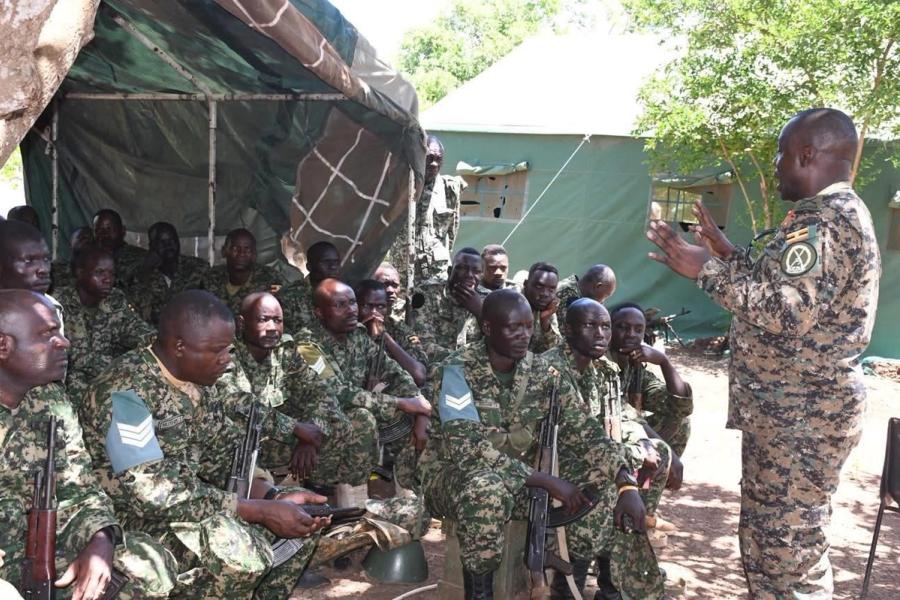
MOGADISHU, OCT, 31-2026-Somalia — Uganda's military withdrawal from Somalia is gathering momentum, with a second flight reportedly carrying 107 Ugandan soldiers departing Aden Adde International Airport in Mogadishu on Saturday morning, October 31, 2026.
The latest departure follows reports that an initial group of 109 Ugandan soldiers left Mogadishu on Friday, October 30, bringing the reported number of troops evacuated aboard the first two flights to 216 personnel. The second flight's passenger count has not yet been independently verified.
The developments mark a significant turning point in Uganda's nearly two-decade military involvement in Somalia, where its forces have played a central role in African Union-led operations against Al-Shabaab and in protecting strategic government installations.
Uganda Confirms Beginning of Withdrawal
On October 29, Uganda's Chief of Defence Forces, General Muhoozi Kainerugaba, publicly announced that the Uganda People's Defence Forces (UPDF) had begun withdrawing from Somalia.
The announcement came after months of warnings from Kampala over financial difficulties, political disagreements and the future of international support for Somalia's security operations.
Uganda's military leadership had previously indicated that its forces could leave Somalia entirely by August 2027, although the precise timetable and scope of the current withdrawal remain uncertain.
Nearly 20 Years of Military Involvement
Uganda became the first African country to deploy troops to Somalia under the African Union Mission in Somalia (AMISOM) in March 2007.
Since then, Ugandan forces have participated in major military campaigns against Al-Shabaab, supported the restoration of government control in Mogadishu and contributed to security operations across Lower Shabelle.
Their deployment continued through successive African Union missions, including AMISOM, the African Union Transition Mission in Somalia (ATMIS), and the African Union Support and Stabilisation Mission in Somalia (AUSSOM), which began operations in January 2025.
Uganda has approximately 4,500 troops authorised under AUSSOM, alongside an additional contingent deployed through bilateral security arrangements with Somalia.
However, the latest withdrawal announcement has not clarified whether all Ugandan deployments will be affected. Regional reporting indicates that the current drawdown is expected to focus on the additional bilateral contingent, while AUSSOM personnel may undergo separate rotations.
Strategic Concerns in Lower Shabelle
The withdrawal has raised concerns about the future security of several strategic towns in Lower Shabelle, including Barawe, Bulo Marer, Qoryoley and Janaale, where Ugandan troops have maintained an important military presence.
Reports indicate that Somali President Hassan Sheikh Mohamud discussed Uganda's continued military deployment with President Yoweri Museveni during talks in Entebbe on October 26.
The Somali president reportedly sought additional time for Ugandan forces to remain in certain locations while Somali security personnel prepared to assume responsibility.
A premature or poorly coordinated withdrawal could place additional pressure on the Somali National Army, particularly in areas where Al-Shabaab remains capable of conducting attacks and exploiting security gaps.
Financial Crisis Behind the Withdrawal
Uganda's decision comes amid growing financial uncertainty surrounding AUSSOM and the wider international security framework supporting Somalia.
At a summit held in Kampala on July 31, 2026, leaders of African Union troop-contributing countries discussed an orderly, coordinated and phased withdrawal in response to worsening funding challenges.
The financial difficulties have been intensified by uncertainty surrounding United States support for the United Nations Support Office in Somalia (UNSOS), which provides essential logistical assistance to African Union operations.
The prospect of reduced funding has raised questions about the sustainability of foreign military deployments and Somalia's capacity to finance and maintain security operations independently.
A Critical Moment for Somalia's Security
The departure of Ugandan troops comes at a sensitive period for Somalia, as government forces continue confronting Al-Shabaab while navigating political divisions and challenges in coordinating security operations.
For nearly two decades, Uganda has been among Somalia's most important military partners, providing troops, operational support and battlefield experience.
The reported departure of 216 soldiers across two flights represents an early stage of the withdrawal rather than confirmation of a complete Ugandan military exit.
The immediate challenge for the Somali government and African Union authorities will be ensuring that any vacated positions are transferred through an organised security arrangement capable of preventing militant groups from exploiting the transition.
As Uganda begins reducing its military presence after nearly 20 years, the central question is whether Somali security forces are sufficiently prepared to assume the responsibilities previously carried by one of the country's largest foreign military partners.