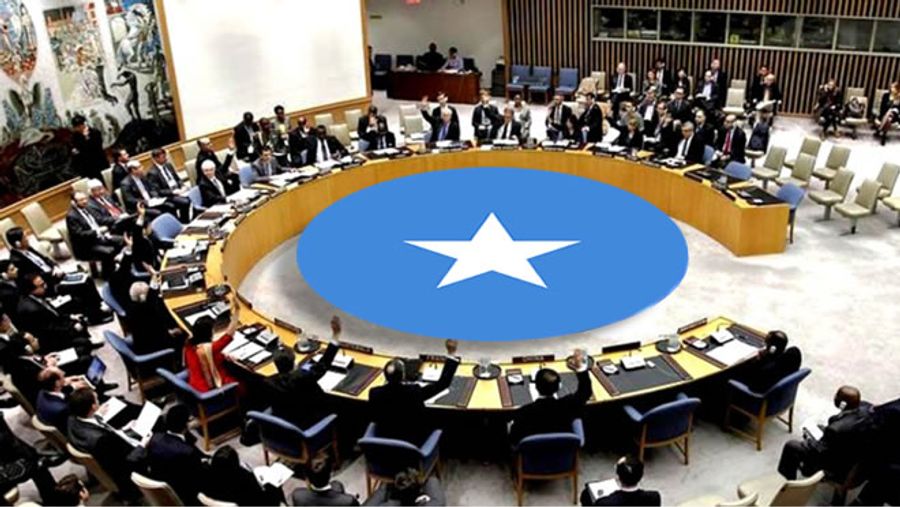
Monday, June 15, 2026 (Baidoa Online) -Members of the United Nations Security Council are set to convene behind closed doors later today to discuss the situation in Somalia, amid reported disagreements over the scope and agenda of the meeting.
Diplomatic sources indicate that Somalia’s federal government has sought to limit discussions to security and logistical support for the African Union mission in the country, while avoiding debate on recent domestic political tensions, including a controversial term-extension dispute and a recent outbreak of armed conflict.
The meeting is expected to focus primarily on the African Union Support and Stabilization Mission in Somalia (AUSSOM) and ongoing efforts to secure international funding for its operations. Representatives from both the United Nations and the African Union are scheduled to brief Security Council members on the latest developments regarding security, stabilization efforts, and the mission’s financial outlook.
According to diplomatic sources, Somalia’s government, with support from some African members of the Security Council, had reportedly sought to limit participation by senior UN officials responsible for Somalia affairs. However, the Council presidency for June, held by Colombia, alongside the United Kingdom, decided that the UN’s Special Representative for Somalia, Raisedon Zenenga, would attend and provide an assessment of the country’s current situation.
The discussions come at a critical moment for international operations in Somalia, as both UN and African Union missions face significant funding shortfalls. The United Nations Support Office in Somalia (UNSOS), which provides logistical assistance to security operations, is reportedly seeking approximately $130 million to sustain its activities. Meanwhile, AUSSOM is facing a funding gap estimated at $38.5 million.
Differences also remain among major international partners regarding the future financing model for the African Union mission, with some key donor countries, including the United States and the United Kingdom, expressing reservations over proposed funding arrangements.
Security assessments presented ahead of the meeting suggest that militant groups continue to retain operational capabilities despite ongoing military offensives. International officials have warned that persistent financial constraints could undermine Somalia’s security transition plans, create gaps in security coverage, and risk reversing gains made in recovering territory from insurgent groups.
The Security Council’s deliberations are expected to shape future international engagement in Somalia at a time when the country faces both evolving security challenges and growing political uncertainty.