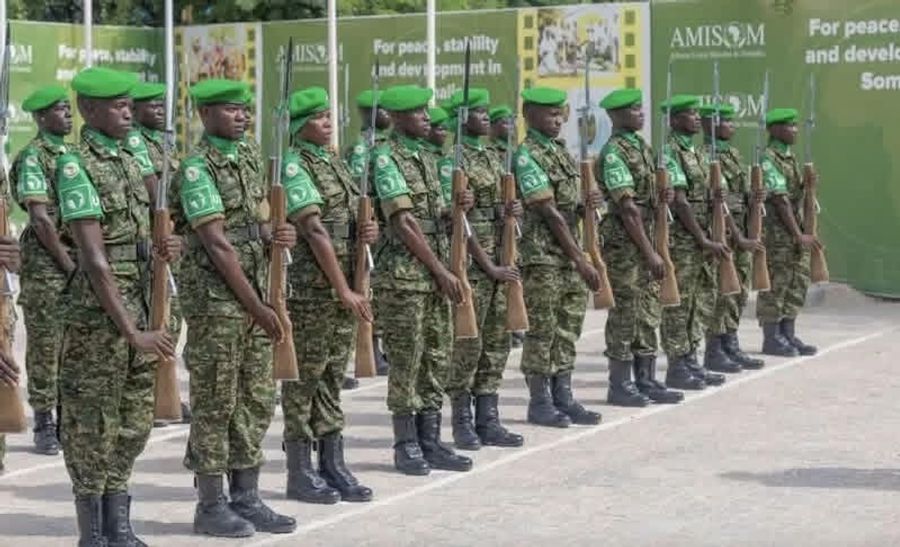
MOGADISHU, Somalia — October 31, 2026 — The United Nations Transitional Assistance Mission in Somalia (UNTMIS) officially reaches the end of its mandate today, marking a significant turning point in Somalia’s relationship with the international community after more than a decade of UN political assistance aimed at rebuilding government institutions, strengthening security structures and supporting national reconciliation.
The mission’s closure follows a two-year transition process requested by the Federal Government of Somalia and authorized by the United Nations Security Council. Its responsibilities have been progressively transferred to Somali institutions and UN agencies, reflecting the country’s ambition to assume greater control over its political and security future.
Although UNTMIS was not a combat mission, its involvement in security-sector reform, police development and coordination with international security partners formed an important part of Somalia’s broader stabilization efforts.
From UNSOM to UNTMIS: More Than a Decade of International Engagement
The mission’s history dates back to June 2013, when the United Nations established the United Nations Assistance Mission in Somalia (UNSOM) to support the country’s recovery following decades of civil conflict, institutional collapse and insecurity.
UNSOM was tasked with providing political guidance, supporting peacebuilding initiatives, promoting human rights and helping Somali authorities strengthen governance and the rule of law.
On November 1, 2024, UNSOM transitioned into UNTMIS under Security Council Resolution 2753, beginning a two-year process designed to gradually transfer responsibilities to Somali institutions.
The transition was subsequently reinforced by Security Council Resolution 2809, adopted in December 2025, which confirmed October 31, 2026, as the date for the mission to cease operations.
Its closure represents the conclusion of more than 13 years of continuous engagement by UN special political missions in Somalia.
A Look Back at Its Security and Military-Related Role
Throughout its existence, UNSOM and subsequently UNTMIS played an advisory and coordination role in Somalia’s security sector.
Unlike African Union peace support missions, UNTMIS did not deploy combat troops to conduct offensives against Al-Shabaab or directly command Somali military operations.
Instead, the mission worked with Somali authorities and international partners to strengthen security institutions, improve accountability and support reforms intended to make national security forces more professional and sustainable.
Its activities included assistance with police development, justice and corrections systems, security-sector governance, stabilization programmes and efforts to reintegrate individuals disengaging from armed groups.
The mission also supported dialogue and coordination among Somali authorities, the African Union and international partners involved in the country’s security transition.
These efforts were intended to help Somalia develop institutions capable of maintaining security independently while reducing long-term reliance on international assistance.
The Fight Against Al-Shabaab and International Security Cooperation
UNTMIS operated during a period when Al-Shabaab remained one of Somalia’s most serious security threats.
The militant group continued to conduct attacks against government institutions, security personnel, civilian communities and international forces despite sustained counterterrorism operations.
While Somali security forces and African Union troops carried out military operations, UNTMIS contributed through political engagement, institutional advice and coordination supporting the wider stabilization process.
Its security-related work also emphasized civilian protection, human rights standards and accountability within national institutions.
The United Nations repeatedly stressed that defeating Al-Shabaab required more than military action, highlighting the importance of effective governance, reconciliation, justice and economic recovery.
Nevertheless, continuing militant activity and insecurity across several regions demonstrate that Somalia’s security transition remains unfinished.
The departure of UNTMIS therefore comes at a sensitive moment, with Somali authorities facing pressure to strengthen their institutions while maintaining security operations against armed groups.
Distinguishing UNTMIS, AUSSOM and UNSOS
The conclusion of UNTMIS does not mean that all United Nations or international security-related operations in Somalia are ending.
Three separate missions have performed different functions within the country’s stabilization framework.
UNTMIS served as the UN political mission responsible for supporting governance, institution-building, human rights and security-sector reform.
The African Union Support and Stabilization Mission in Somalia (AUSSOM), which succeeded ATMIS in January 2025, is responsible for supporting Somali security forces in stabilization and counterterrorism efforts.
Meanwhile, the United Nations Support Office in Somalia (UNSOS) provides logistical assistance to authorized African Union personnel and eligible Somali security forces.
Under Security Council Resolution 2809, AUSSOM’s authorization continues until December 31, 2026, while UNSOS remains responsible for providing mandated logistical support.
This distinction is particularly important because the closure of UNTMIS should not be interpreted as a complete withdrawal of international military assistance from Somalia.
Somalia Assumes Greater Responsibility
The decision to conclude UNTMIS reflects the Somali government’s request for greater national ownership of political and institutional development.
During the transition, UN officials worked with Somali counterparts through a jointly agreed roadmap to transfer the mission’s responsibilities.
The handover covered governance, electoral assistance, human rights, rule of law, security-sector support and coordination with international partners.
Speaking at a mission closure ceremony on October 27, UNTMIS Officer-in-Charge Raisedon Zenenga highlighted the importance of preserving institutional achievements and ensuring that Somali authorities could continue carrying out responsibilities previously supported by the mission.
The United Nations has presented the transition as an important step toward Somali self-reliance rather than an end to its partnership with the country.
However, the success of the transition will depend heavily on Somalia’s ability to maintain functioning institutions, strengthen cooperation between federal and state authorities and address persistent security challenges.
Political Divisions and Unresolved Security Challenges
UNTMIS concludes its operations at a time when Somalia continues to face significant political and security difficulties.
Disagreements over federalism, constitutional arrangements, electoral processes and relations between the Federal Government and Federal Member States remain central challenges.
At the same time, Al-Shabaab continues to threaten stability, particularly in areas where government authority and essential public services remain limited.
These pressures underline the importance of political reconciliation alongside military and security reforms.
Without effective coordination between national institutions, regional administrations and international security partners, progress achieved through years of international assistance could remain vulnerable.
The UN Secretary-General has called for sustained international engagement to consolidate Somalia’s achievements and support an orderly security transition.
What Comes Next for Somalia?
Although UNTMIS ends its mandate on October 31, the United Nations will maintain its presence through resident agencies, funds and programmes working on development, humanitarian assistance, human rights and peacebuilding.
Cooperation with Somali authorities, the African Union and international partners will also continue.
For Somalia, the mission’s departure represents both an important assertion of national responsibility and a test of institutional resilience.
More than a decade of UN political engagement has helped establish frameworks for governance, reconciliation and security-sector development, but major challenges remain unresolved.
The ultimate measure of UNTMIS’s legacy will not simply be the completion of its mandate, but whether Somali institutions can preserve and build upon the progress achieved.
As UNTMIS closes its doors, Somalia enters a new chapter in which the responsibility for securing lasting peace, strengthening state institutions and determining the country’s political future increasingly rests with Somali leadership.