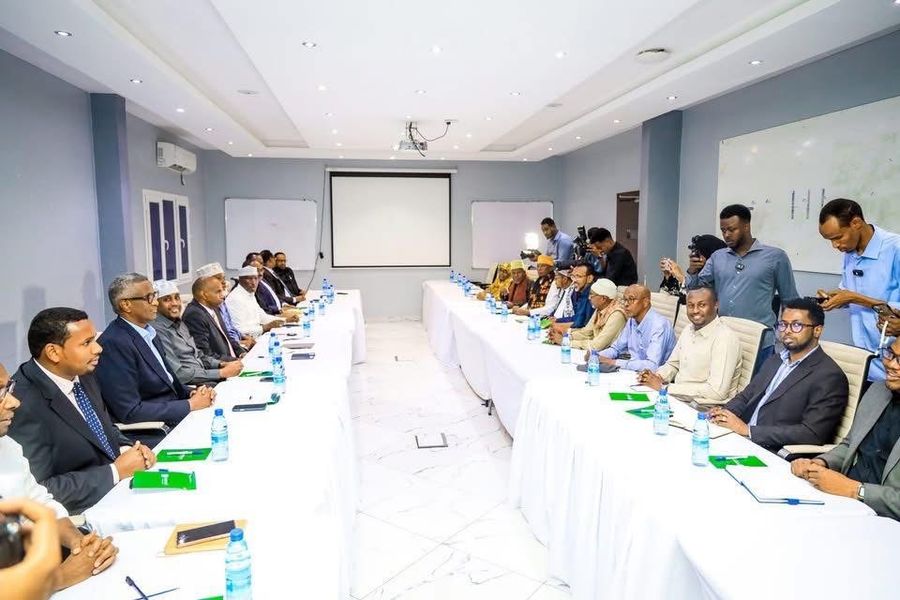
MOGADISHU, Somalia — July 28, 2026 — The United States and the United Kingdom are seeking to bring Somalia’s top political leaders together for renewed talks aimed at reaching a political agreement, according to sources familiar with diplomatic efforts in Mogadishu. The proposed dialogue would include President Hassan Sheikh Mohamud, opposition leaders, and regional administrations amid escalating disputes over elections, constitutional reforms, and governance.
Western diplomatic partners are working to organize a new round of high-level political discussions between Somalia’s federal government and opposition figures in an effort to resolve a growing political standoff, according to informed sources.
The planned talks are expected to involve Somali President Hassan Sheikh Mohamud, leaders of Jubaland and Puntland, members of the Mogadishu-based Salvation and Rescue Council, and other senior political actors.
Sources familiar with the initiative said the objective is to reach a political settlement that can address disagreements over Somalia’s electoral process, constitutional issues, and the future direction of the country’s governance system.
However, the sources indicated that expectations for a breakthrough remain limited due to deep divisions between the federal government and opposition groups.
The latest diplomatic push comes as political tensions continue to rise following disagreements over constitutional amendments, election arrangements, and the legitimacy of the current political process.
Opposition groups have argued that Somalia faces a legitimacy challenge and have questioned the government’s authority to continue implementing major political decisions without a broader national agreement.
President Hassan Sheikh Mohamud’s administration has rejected those claims and maintained that its mandate remains valid while continuing efforts to advance political and institutional reforms.
International Pressure and Diplomatic Efforts
According to sources familiar with the discussions, Western governments are increasing diplomatic engagement to prevent Somalia’s state-building process from facing further setbacks after years of international support and billions of dollars in aid aimed at strengthening national institutions.
The United States and the United Kingdom have been among Somalia’s key international partners, supporting security operations, governance reforms, humanitarian programs, and institution-building efforts.
Diplomatic sources said international partners are concerned that prolonged political disagreements could weaken government institutions, distract from security priorities, and affect broader development efforts.
One Western country is reportedly encouraging Somali leaders to reach a political compromise, while warning that failure to achieve an agreement could lead to discussions about alternative approaches to Somalia’s political transition and governance arrangements.
Sources said some proposals being considered include renewed engagement with different political stakeholders and possible adjustments to the current political framework if consensus cannot be reached.
Somalia has faced repeated political disputes over elections, constitutional reforms, and power-sharing arrangements since the collapse of the central government in 1991.
Relations between the federal government and some regional administrations have periodically deteriorated over disagreements about political authority, resource-sharing, security responsibilities, and electoral processes.
Puntland and Jubaland leaders have previously opposed some federal government initiatives, particularly those related to constitutional changes and election planning, arguing that major decisions require wider consultation among Somalia’s federal member states.
Opposition groups in Mogadishu have also called for a broader political dialogue before implementing significant changes to the country’s governance structure.
The disagreements have intensified as Somalia approaches a critical period for determining future electoral arrangements and completing long-running constitutional reforms.
The Somali government has not officially confirmed details of the reported diplomatic initiative.
Officials from the federal administration have previously stated that the government remains committed to political dialogue and cooperation with federal member states while defending its reform agenda.
Opposition leaders and regional authorities have not publicly announced whether they have agreed to participate in a new meeting.
A political agreement between Somalia’s federal government and opposition leaders could help reduce tensions and provide a clearer path toward elections and constitutional reforms.
Failure to reach consensus could deepen divisions between political stakeholders, potentially affecting governance, security coordination, and international support.
The dispute also comes at a sensitive time as Somalia continues military operations against Al-Shabaab militants and relies heavily on international partnerships for security and development assistance.
For international partners, maintaining political stability remains a priority as they seek to protect years of investment in Somalia’s state-building process.
Diplomatic efforts are expected to continue as international partners encourage Somali leaders to participate in negotiations.
The success of any future meeting will depend on whether the federal government, opposition groups, and regional administrations can agree on the agenda, election arrangements, and constitutional questions at the center of the dispute.