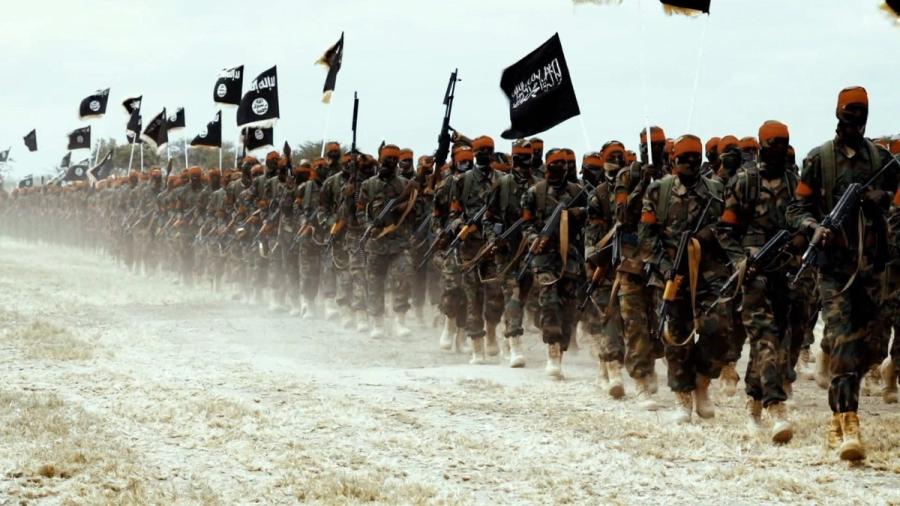
Tuesday , June 16, 2026 (Baidoa Online) -Four years after the Somali government launched its widely praised 2022 offensive against Al-Shabaab, security gains achieved across central Somalia are increasingly under pressure as the militant group continues to reclaim strategic territories and expand its influence in key regions.
According to security sources who spoke to Baidoa Online, Al-Shabaab has successfully exploited political divisions, security gaps, and the slowdown of government military operations to regain momentum across several fronts. The militants have re-established control in a number of previously liberated areas, including Maxaas district in Hiiraan region, where the group had been largely absent for more than a decade.
Security officials and regional analysts warn that Somalia may be entering a new phase of the conflict in which Al-Shabaab is no longer primarily defending its traditional strongholds but is actively reversing government gains made during the 2022-2023 offensive.
A Strategic Reversal
According to security assessments and open-source intelligence reports, Al-Shabaab’s 2025 counteroffensive marked a significant turning point in the conflict. The group systematically targeted vulnerable government positions, strategic supply routes, and recently liberated towns, gradually reversing many of the gains achieved during the government’s “total war” campaign launched in 2022.
Security sources familiar with developments in Hirshabelle told Baidoa Online that the militants spent months rebuilding their operational networks, recruiting new fighters, collecting taxes, and re-establishing intelligence cells before launching coordinated attacks across multiple regions.
Growing Concerns Among Security Analysts
Several Somali and international analysts argue that the federal government’s military campaign has lost momentum amid growing political disputes and institutional challenges.According to political observers, national attention has increasingly shifted toward constitutional amendments, election-related controversies, disputes with federal member states, and political tensions in Mogadishu. Critics contend that these issues have diverted resources and strategic focus away from counterinsurgency operations.
“Al-Shabaab traditionally benefits whenever Somalia’s political leadership becomes divided,” one regional security analyst told Baidoa Online. “The group understands that political fragmentation often creates operational opportunities on the battlefield.”
How Al-Shabaab Regained Lost Territory
Military experts identify several factors behind the militants’ resurgence:
- The slowdown of offensive operations following the initial successes of 2022.
- Insufficient stabilization efforts in newly liberated areas.
- Weak local governance structures after military victories.
- Reduced coordination between federal authorities and some federal member states.
- The gradual withdrawal and restructuring of international security missions.
- Al-Shabaab’s continued ability to recruit, train, and finance operations through its extensive taxation network.
According to security sources, many areas liberated during the first phase of the offensive lacked a permanent security presence, allowing Al-Shabaab fighters to gradually return and rebuild their influence.
Maxaas: A Symbolic Setback
Among the most significant developments cited by security observers is the return of Al-Shabaab to Maxaas district.The town holds strategic and symbolic importance because it had remained outside Al-Shabaab’s control for approximately 12 years. Security analysts say the militants’ ability to return to such an area demonstrates both their resilience and the challenges facing government stabilization efforts.
“The recapture of areas like Maxaas provides a significant morale boost for Al-Shabaab fighters and supporters,” a security source familiar with operations in central Somalia told Baidoa Online.
The loss of Maxaas highlights the government’s struggle to sustain control over previously liberated areas and reflects Al-Shabaab’s ability to regroup, exploit security gaps, and launch coordinated counteroffensives. Analysts say the recapture of the town has provided the militants with a significant morale boost while raising questions about the long-term sustainability of recent military gains.
Hawaadley and Basra: Renewed Pressure on Mogadishu
Al-Shabaab’s growing presence in Hawaadley and Basra has emerged as another significant indicator of the group’s resurgence following the slowdown of government offensives. Hawaadley in the Middle Shabelle region and Basra in Lower Shabelle, located within striking distance of Mogadishu, have increasingly become important operational hubs for the militants. According to security sources who spoke to Baidoa Online, Al-Shabaab has exploited the slowdown in military operations and ongoing political divisions to rebuild its capabilities and expand its influence in strategically important areas. Security analysts believe the group’s presence in Hawaadley and Basra provides it with the ability to threaten key supply routes leading to the capital, conduct attacks against government forces, and maintain continuous pressure on Mogadishu’s security environment.
According to regional security experts, Al-Shabaab has used the operational pause to strengthen its command structure, improve logistics, recruit new fighters, and reinforce defensive positions across central and southern Somalia. Security sources further indicate that the group has intensified recruitment efforts and expanded training activities in areas under its influence, enabling it to replenish losses suffered during previous government offensives. Analysts warn that the longer the militants are allowed to consolidate their control in these strategic locations, the more difficult and costly future military operations will become. They argue that without sustained military pressure, stronger coordination between federal and regional authorities, and effective stabilization efforts in liberated areas, Al-Shabaab could further entrench its positions and pose an increasingly serious threat to both Mogadishu and the wider south-central regions of Somalia.
The Recruitment Factor
Analysts also warn that the slowdown in sustained military pressure has given Al-Shabaab additional time to replenish its ranks.According to regional security experts, the group continues to recruit and train fighters in remote areas of southern and central Somalia. Intelligence assessments indicate that Al-Shabaab has maintained training facilities and recruitment networks despite years of military pressure.
Security sources say newly trained recruits have increasingly appeared in recent offensives across Middle Shabelle, Hiiraan, Bay, and Lower Shabelle regions.
Why Was Al-Shabaab Able to Exploit These Political Divisions?
Al-Shabaab has historically thrived whenever Somalia’s political actors are divided.
The group does not necessarily need to defeat the government in conventional warfare. Instead, it benefits when security coordination weakens, political leaders become distracted, and local communities lose confidence in state institutions.Analysts note that Al-Shabaab’s strategy increasingly focuses on attrition—slowly exhausting the government through constant attacks, infiltration, economic pressure, and psychological warfare rather than attempting to seize major cities outright.
Why Was the Government Unable to Focus on Stabilization?
Political disputes increasingly dominated the national agenda.Over the past four years, tensions between Mogadishu and several Federal Member States—including Puntland and Jubaland—have intensified.
At the same time, political disagreements over constitutional amendments, election arrangements, and power-sharing have consumed significant government attention. Critics argue that security resources were increasingly diverted toward managing domestic political disputes rather than maintaining pressure on Al-Shabaab.
Some opposition figures claim that the political crisis deepened after President Hassan Sheikh Mohamud remained in office beyond May 15, 2026, a claim rejected by government supporters who argue that constitutional changes were necessary to facilitate future direct elections. The resulting political tensions have further polarized the country.
Looking Ahead
While the Somali government continues to conduct military operations and retains control of major urban centers, security analysts caution that reclaiming lost territories may become increasingly difficult if current trends continue.According to security sources who spoke to Baidoa Online, Al-Shabaab’s recent battlefield successes have boosted the group’s confidence, strengthened recruitment efforts, and improved its ability to project power beyond its traditional strongholds.
“The longer the militants are allowed to consolidate their positions, the more costly future military operations are likely to become,” one analyst said.
The current dynamics of Somalia’s conflict with Al-Shabaab reflect not a simple military failure, but a broader strategic imbalance driven by political fragmentation, inconsistent stabilization efforts, and the group’s adaptive insurgency tactics. While the 2022 government offensive achieved significant territorial gains, the lack of sustained control over liberated areas, combined with escalating political disputes, has enabled Al-Shabaab to regroup and re-expand into previously cleared territories. According to security sources cited by Baidoa Online and other professional assessments, the situation highlights a critical strategic reality: without unified political leadership, strong and lasting state presence in recovered areas, and continuous counterinsurgency pressure, territorial gains are likely to remain reversible, allowing the insurgency to exploit governance gaps and security vacuums to its advantage.
By Baidoa Online Security Desk