Thursday, June 4, 2026 (Baidoa Online) -A high-level Turkish delegation that was expected to arrive in Mogadishu on Thursday has postponed its planned visit following armed clashes in the Somali capital between government forces and opposition-aligned fighters, according to multiple political and diplomatic sources familiar with the matter.
The delegation had reportedly been preparing to facilitate talks aimed at easing tensions between the Federal Government of Somalia and opposition leaders amid a deepening political dispute over the country's electoral process and constitutional framework.
The postponement comes one day after fighting erupted in Mogadishu involving forces aligned with the federal government and opposition figures, including former Somali President Sheikh Sharif Sheikh Ahmed and former Prime Minister Hassan Ali Khaire. Security sources indicate that government troops and opposition-aligned forces remain in close proximity in parts of Mogadishu's Abdiaziz district, raising concerns that the situation could deteriorate further.
Why the Turkish Mission Matters
Turkey has emerged over the past decade as one of Somalia's most influential international partners, maintaining extensive security, economic, and development ties with the federal government. Turkish officials were reportedly exploring a role in facilitating dialogue between political stakeholders as Somalia faces growing uncertainty over its political future.
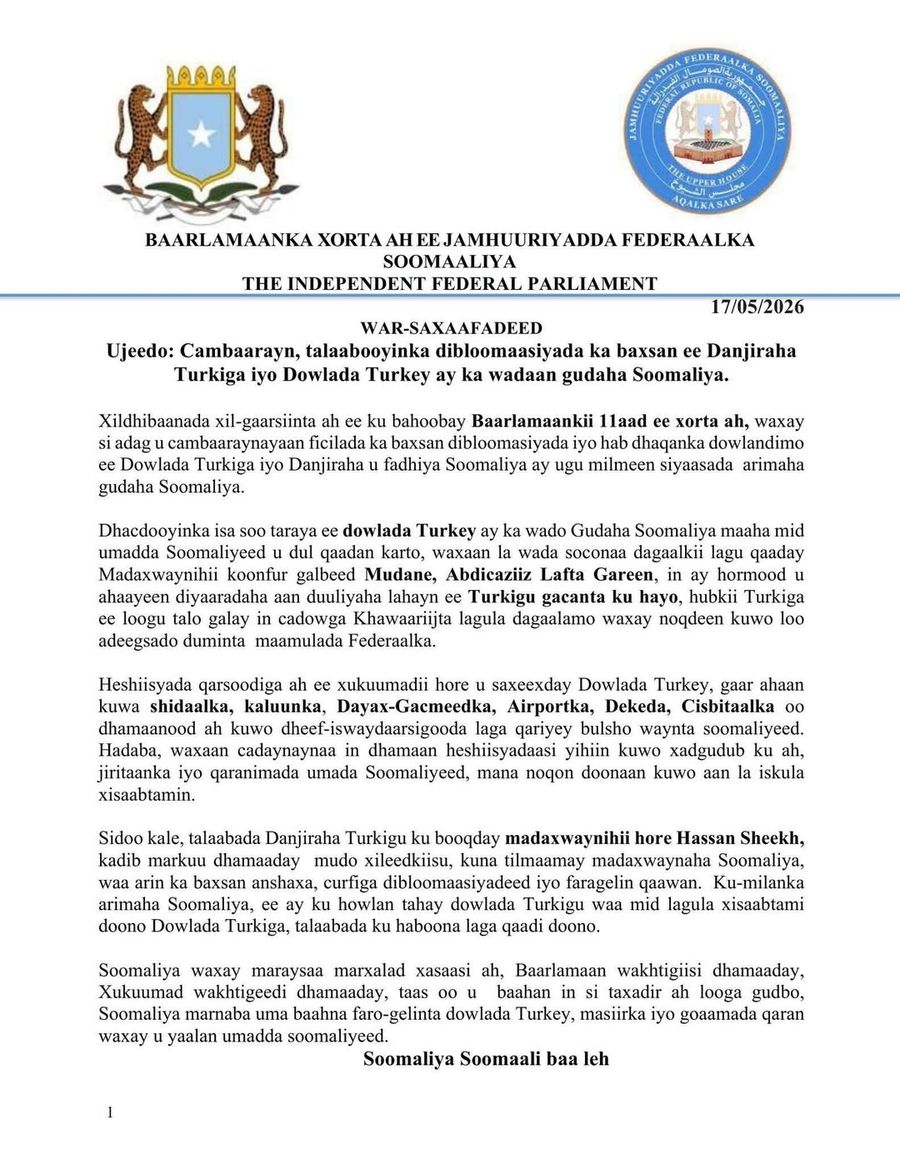
However, sources within the opposition say there has been significant resistance to Ankara playing a leading mediation role. Opposition leaders have argued that Turkey is too closely aligned with President Hassan Sheikh Mohamud's administration to be viewed as a neutral broker.
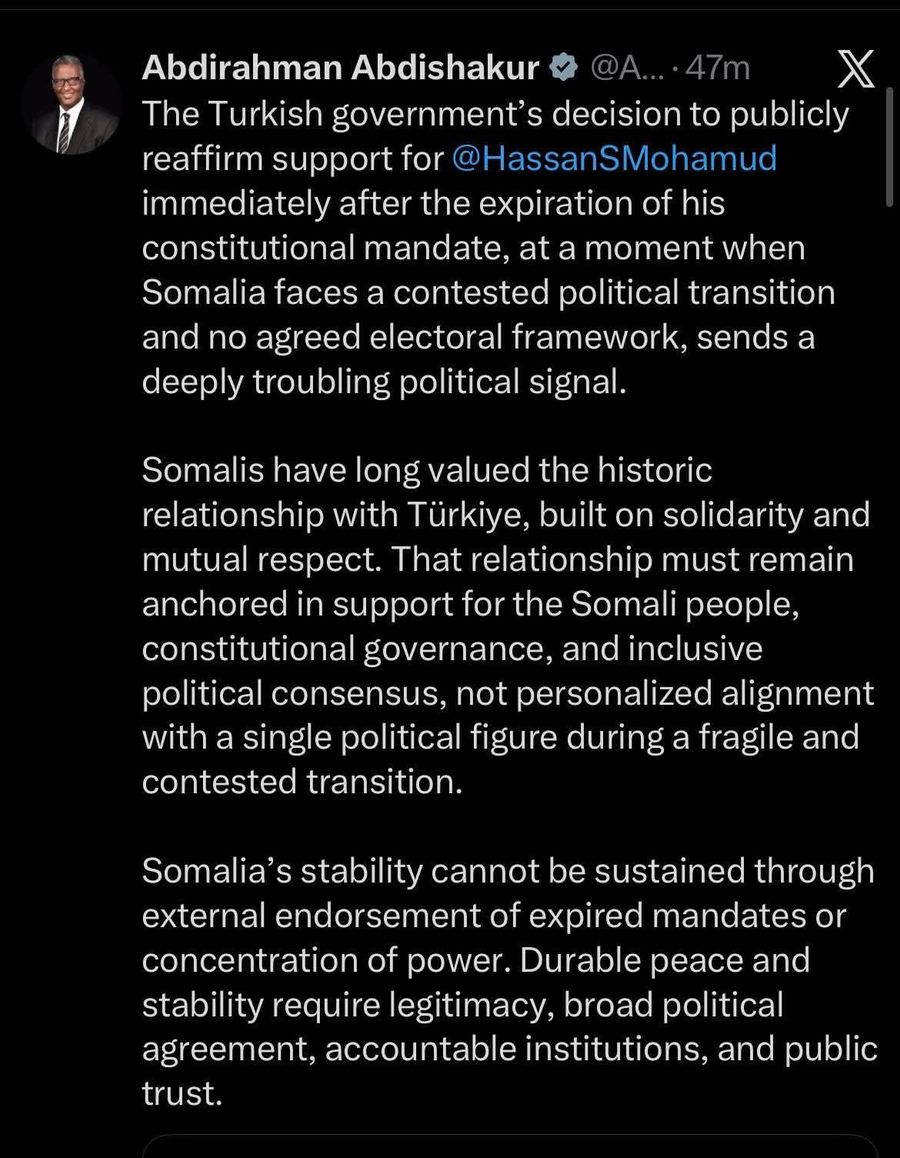
The opposition maintains that the president's mandate expired on May 15, 2026, and has questioned the legitimacy of his continued tenure, a position strongly rejected by the federal government and its supporters.
Opposition Preference for Western-Led Mediation
The growing debate over who should mediate Somalia's political crisis has emerged as a key factor complicating Ankara's diplomatic efforts.
According to political sources familiar with discussions among opposition leaders, several opposition factions in Mogadishu, as well as leaders in Jubbaland and Puntland, have expressed greater confidence in mediation efforts led by Western and multilateral partners, including the United Nations, African Union, European Union, United Kingdom, and the United States.
Sources say opposition figures view these actors as more likely to maintain neutrality in negotiations concerning Somalia's electoral dispute and constitutional disagreements. By contrast, some opposition leaders have openly objected to a prominent Turkish mediation role, arguing that Ankara's close relationship with the federal government undermines perceptions of impartiality.
As a result, Turkish diplomats have reportedly struggled to secure broad support from major opposition stakeholders for any Ankara-led initiative. Political observers note that mediation efforts in deeply divided political environments often depend as much on perceptions of neutrality as on diplomatic influence.
According to regional sources familiar with ongoing diplomatic discussions, some countries that support the Somali government have also expressed reservations about Turkey assuming a dominant role in mediation efforts.
The absence of the Turkish delegation from Mogadishu on the date initially anticipated is being viewed by some political observers as a sign that Ankara's mediation initiative has encountered significant obstacles.
Perceptions of Turkish Alignment with the Federal Government
Criticism of Turkey's role intensified after President Hassan Sheikh Mohamud's disputed post-May 15 tenure became a central issue in Somalia's political crisis.
Opposition figures have pointed to meetings between senior Turkish officials, including the Turkish ambassador, and the Somali president at the presidential palace as evidence of Ankara's continued engagement with the federal administration during a politically sensitive period.
While such meetings are routine diplomatic practice between states, some opposition supporters and civil society voices interpreted them as signs that Turkey had aligned itself too closely with one side of the political dispute.
Multiple sources and political claims circulating among opposition-linked and regional accounts also allege that Turkish military aircraft, including F-16 fighter jets, have previously conducted low-altitude flights over parts of Mogadishu and Baidoa in recent weeks.
According to these claims, the flights were interpreted by opposition figures as a form of military signaling or deterrence during heightened political tensions. However, these allegations have not been independently verified, and there has been no official confirmation from Turkish or Somali authorities regarding such operations.
Allegations From Baidoa and Southwest State
Additional reports emerging from Baidoa have further intensified political tensions surrounding Turkey’s role in Somalia.
According to verified claims circulating among local sources and opposition-linked accounts, vehicles and equipment associated with Turkish-trained forces have been accused of being used in operations that some describe as intimidation or harassment of civilians in parts of South West State.
These allegations come alongside past statements attributed to South West State President Abdiaziz Hassan Mohamed (Laftagareen), who has in earlier political contexts alleged that Turkish drones and armed vehicles were used in operations affecting communities in the region.
Mogadishu Allegations and Claims of Turkish-Origin Equipment in Clashes
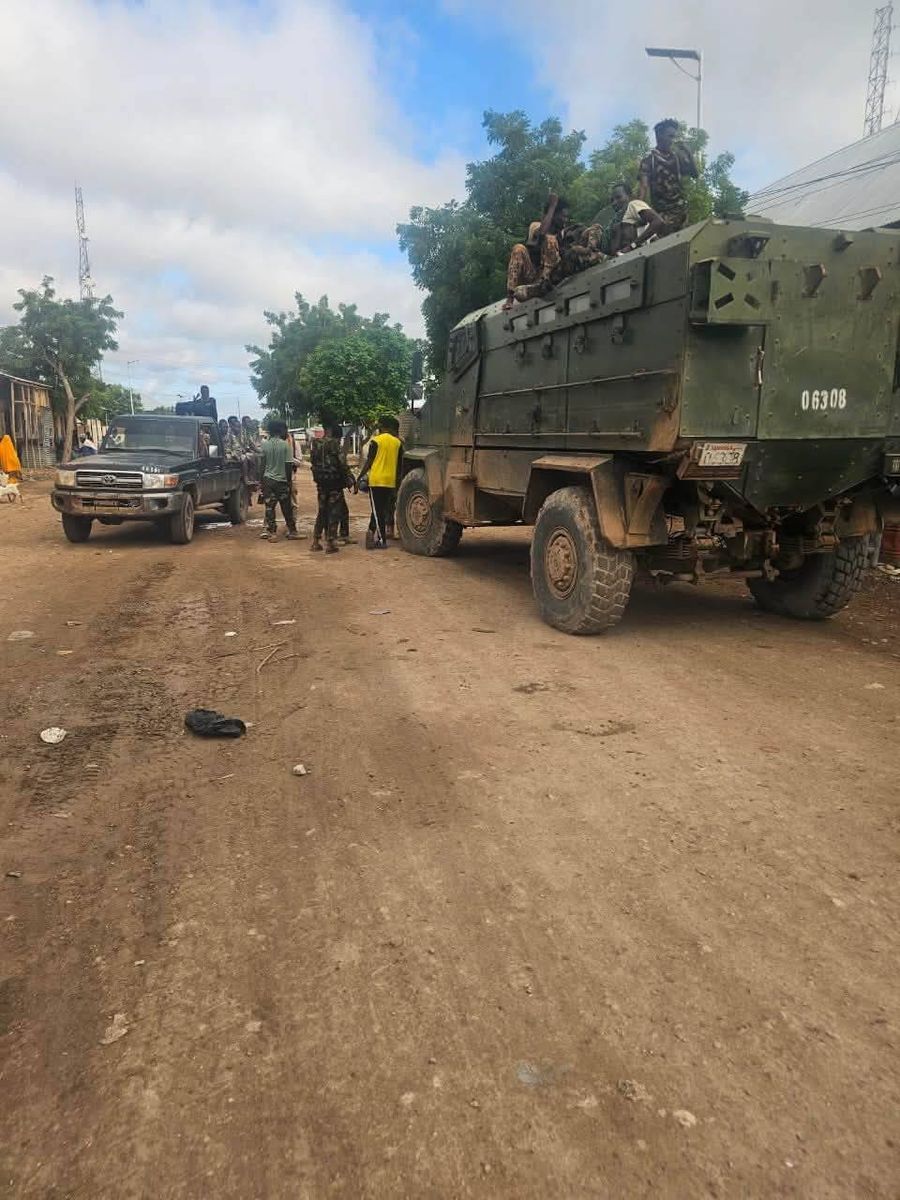
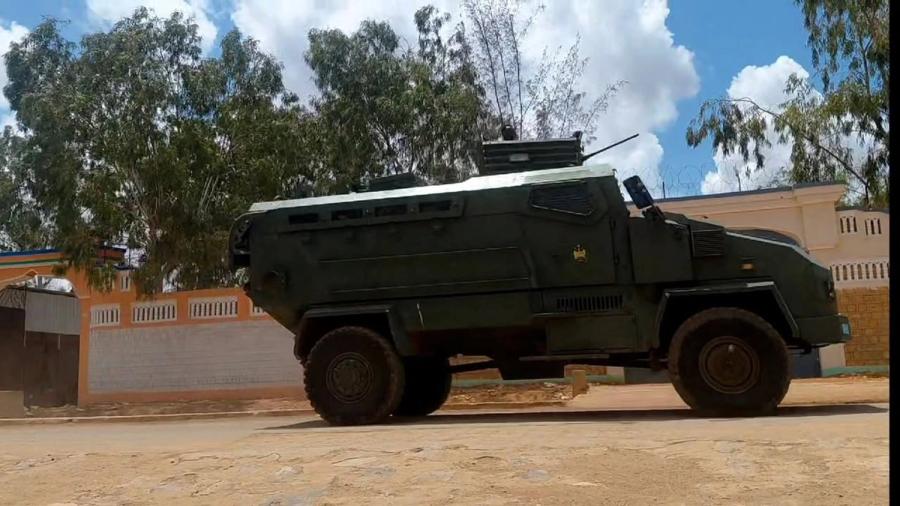
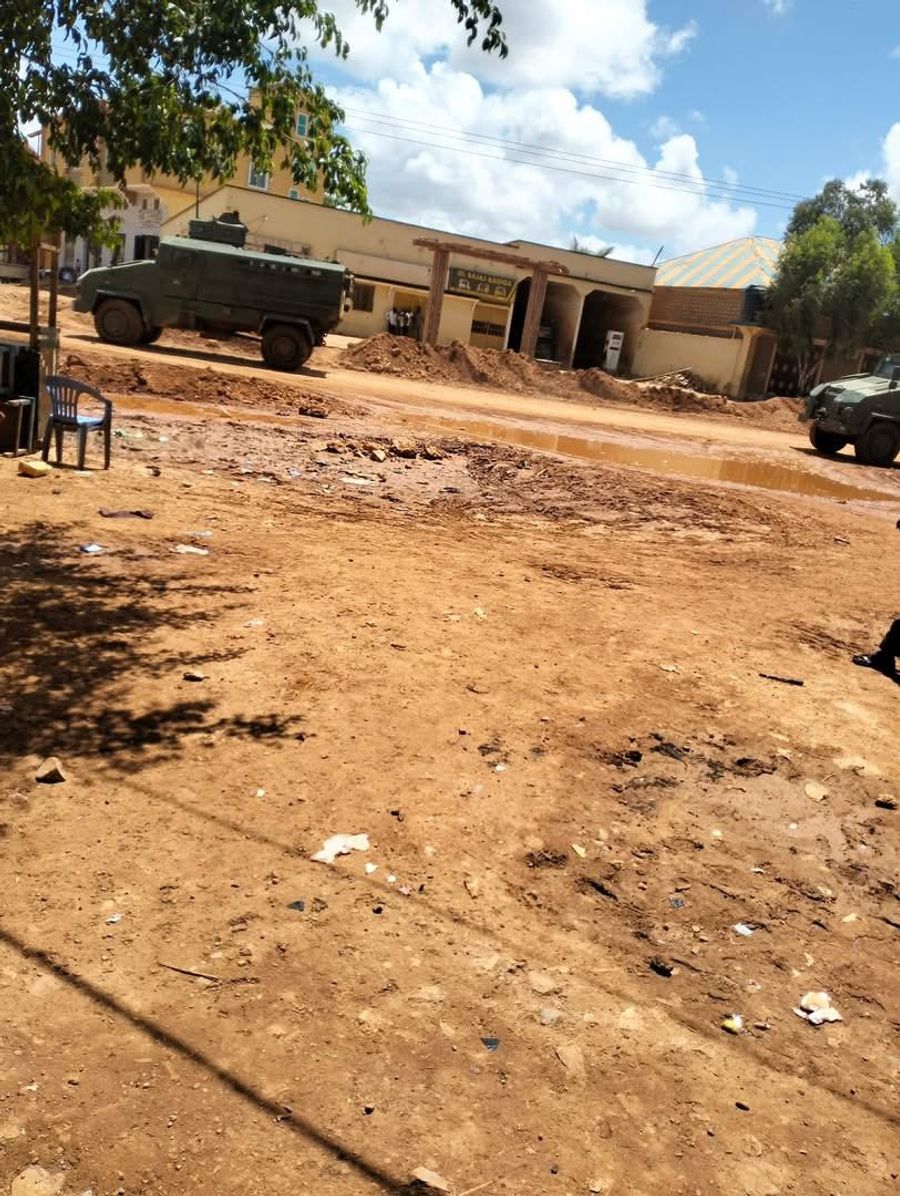
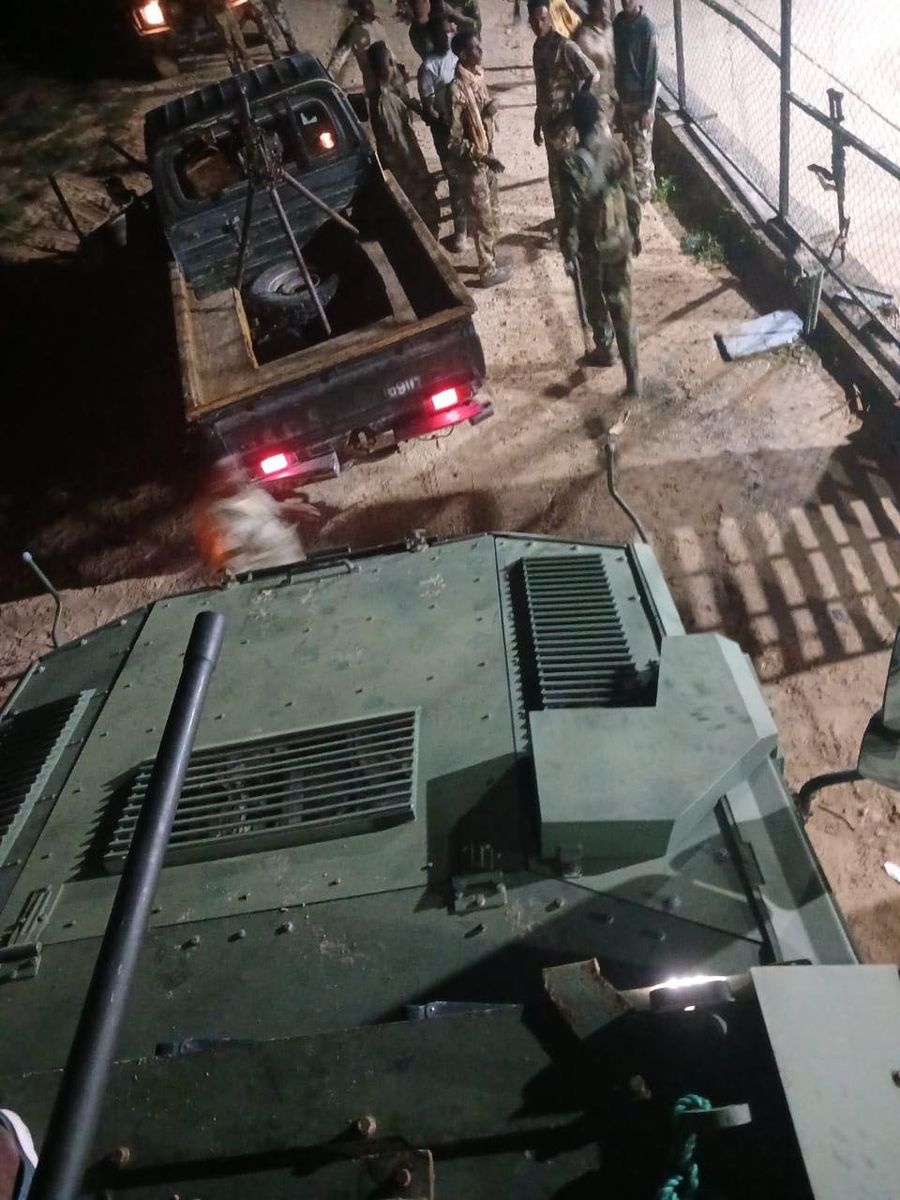
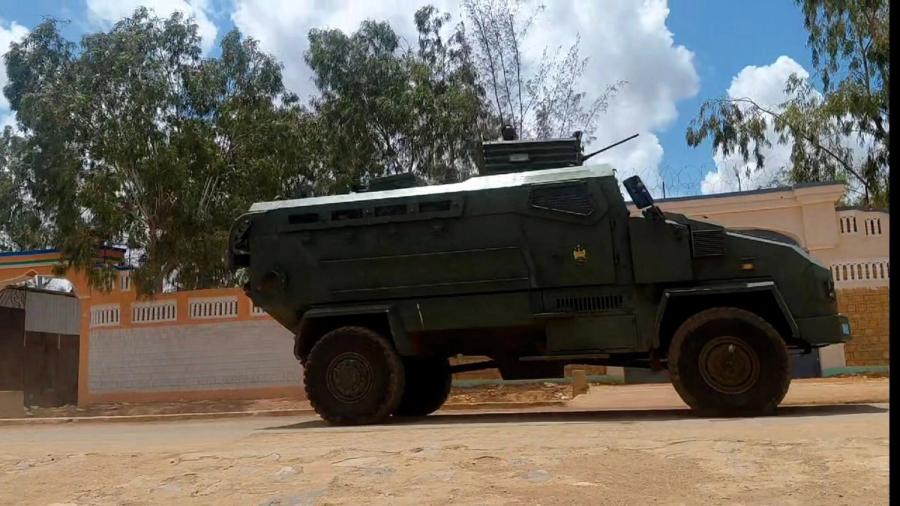
Further allegations have emerged from Mogadishu amid the ongoing political and security tensions, with opposition-linked sources and social media posts claiming that Turkish-supplied armored vehicles were used by Somali government forces during recent clashes in parts of Abdiaziz district.
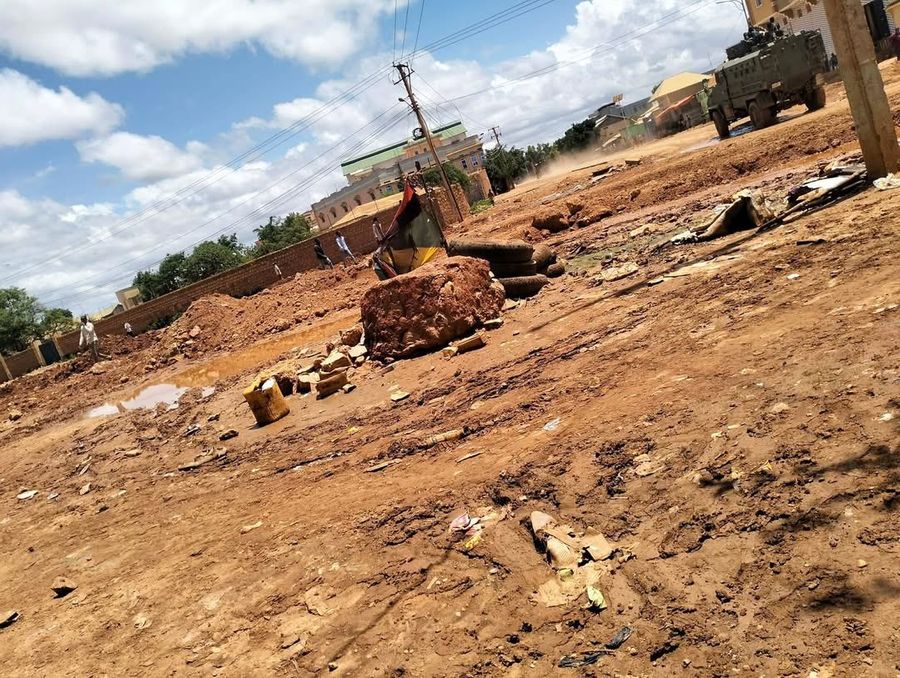
According to these verified accounts, the reported incidents took place during fighting near residential areas, including the Mirinaayo neighborhood, where intense overnight confrontations were said to have occurred between government-aligned units and forces loyal to a former Somali president.
Some opposition-aligned sources also claim that two armored vehicles believed to be of Turkish origin were destroyed during the fighting. These claims are accompanied by circulating images and video material said to originate from the scene.
If verified, such developments would mark a significant escalation in political sensitivities surrounding foreign military assistance in Somalia and could further deepen mistrust among opposition groups, who already accuse Turkey of being too closely aligned with the federal government.
Analysts note that if accurate, such actions would carry significant political sensitivity and could further complicate Turkey’s perceived neutrality in Somalia’s internal political disputes. At the same time
Diplomatic analysts note that whether or not such perceptions are accurate, they can significantly affect a mediator's credibility. In conflict-resolution processes, successful mediation often depends on the confidence of all major stakeholders, particularly opposition groups that must agree to participate in negotiations.
Why This Matters
The challenge facing Turkey is not necessarily a lack of influence in Somalia. Ankara remains one of Somalia's most significant security and economic partners and maintains substantial leverage through its long-standing investments and strategic cooperation.
The greater challenge is political legitimacy as a mediator.
If key opposition actors continue to view Turkey as favoring the federal government, Ankara may find it difficult to position itself as the primary facilitator of talks. This could increase pressure for mediation efforts to be led by broader international coalitions involving the United Nations, African Union, European Union, United Kingdom, and United States, all of which have signaled support for dialogue aimed at preventing further escalation of Somalia's political crisis.