Yemen Governor’s Remarks Questioning Socotra’s Status Trigger Political Debate
Saturday , June 20, 2026 (Baidoa Online) -A fresh political controversy has emerged in Yemen after the governor of the Socotra Archipelago, Raafat Al-Thaqali, publicly questioned the island group’s relationship with Yemen during a meeting attended by regional governors aligned with the internationally recognized government based in Aden.
The remarks, delivered last week, have generated widespread debate across Yemen and the wider region, with critics accusing the governor of undermining Yemen’s territorial integrity, while supporters argue that his comments reflected longstanding discussions about Socotra’s unique geographic and political identity.
Speaking during the meeting, Al-Thaqali reportedly stated that “Socotra is not land owned by Yemen” and further asked, “What proves that Socotra belongs to Yemen?” The comments quickly spread across Yemeni media and social media platforms, prompting strong reactions from politicians, journalists, and members of the public.
Geographic Argument Fuels Debate
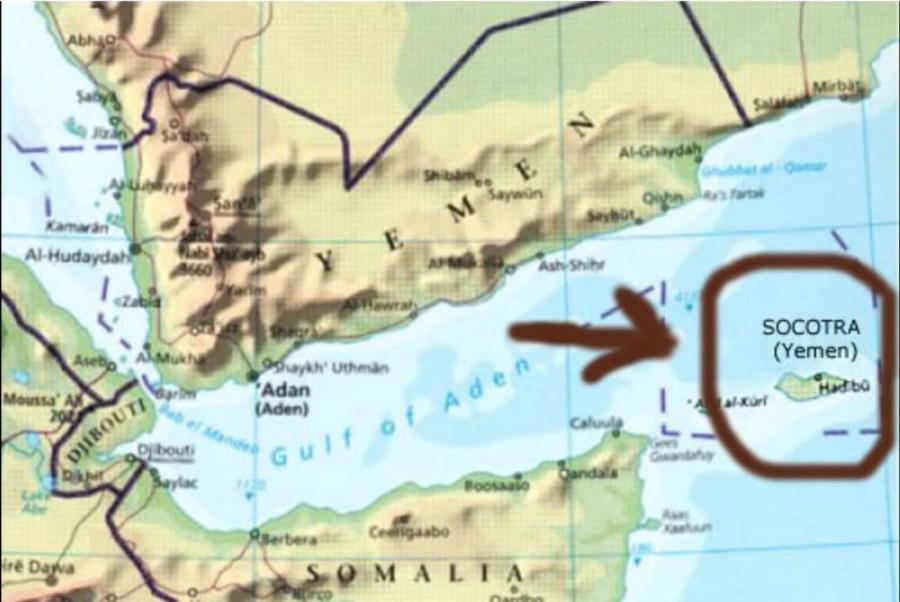
During his remarks, Al-Thaqali also highlighted Socotra’s geographic location, noting that the archipelago lies closer to Somalia than to mainland Yemen.
According to geographical data, Socotra is located approximately 240 kilometers from Somalia’s northeastern coastline in Puntland’s Bari region, while the island sits roughly 380 kilometers from mainland Yemen. Although geographic proximity does not determine sovereignty under international law, the governor’s comments revived discussions about the archipelago’s historical, political, and strategic significance.
Many observers interpreted the remarks as suggesting support for greater autonomy or a distinct political future for Socotra, although Al-Thaqali did not explicitly call for independence from Yemen.
Political Background
The controversy comes amid years of political tensions surrounding Socotra, a strategically located archipelago in the Arabian Sea that has increasingly become a focus of regional competition.
According to reports from Yemeni media outlets, including Al-Mahrah TV, Al-Thaqali played a leading role in the events of June 2020 when forces aligned with the Southern Transitional Council (STC) took control of Socotra and replaced the local administration that had been loyal to Yemen’s internationally recognized government.
The takeover was widely viewed as a significant shift in the balance of power on the island. At the time, Yemeni officials and political observers alleged that the STC received support from the United Arab Emirates (UAE), claims that have remained a source of political dispute.
According to Yemeni reports, Al-Thaqali was formally appointed governor of Socotra in 2022. Some political figures claimed the appointment came amid pressure from the UAE on authorities in Aden, although such allegations remain politically contested.
Strategic Importance of Socotra
Socotra occupies one of the most strategically important maritime locations in the region. Situated near major international shipping routes connecting the Gulf of Aden, the Arabian Sea, and the Indian Ocean, the archipelago has long attracted regional and international attention.
The islands are also internationally renowned for their unique biodiversity. In 2008, the archipelago was designated a UNESCO World Heritage Site because of its exceptional ecological value and rare plant species found nowhere else in the world.
Security analysts have repeatedly highlighted Socotra’s importance in regional maritime security, particularly given ongoing tensions in the Red Sea and Gulf of Aden.
Somalia’s Historical Position
The debate has also revived discussion about historical claims relating to the islands.
According to regional political observers, Somalia previously raised questions regarding Socotra’s status in communications with the United Nations in 2010. Reports at the time suggested that Somali authorities argued the islands were located beyond Yemen’s traditional maritime boundaries.
However, the issue did not develop into a sustained diplomatic dispute. Internationally, Socotra continues to be recognized as part of the Republic of Yemen, and no current international legal process challenges Yemen’s sovereignty over the archipelago.
Neither the Federal Government of Somalia nor Puntland authorities have recently issued official statements regarding Al-Thaqali’s latest comments.
Reactions Across Yemen
The governor’s remarks have triggered criticism from several Yemeni political commentators and public figures who argue that questioning Socotra’s status risks fueling divisions at a time when Yemen continues to face political fragmentation and conflict.
According to local media reports, some critics described the comments as inconsistent with Yemen’s constitutional framework and territorial unity. Others linked the remarks to broader debates over southern self-determination and the future of territories under the influence of the Southern Transitional Council.
Supporters of Al-Thaqali, meanwhile, argued that Socotra possesses unique historical, cultural, and geographic characteristics that distinguish it from mainland Yemen.
Current Situation
As of this week, Yemeni authorities have not announced any formal investigation or legal action regarding the governor’s statements. The controversy remains largely political and media-driven, with discussion continuing across television networks, online platforms, and political forums.
Observers say the debate is likely to continue as Yemen navigates broader questions surrounding governance, regional autonomy, and competing political visions for the country’s future.
What Happens Next?
Political analysts expect further clarification from officials affiliated with the Aden-based government and the Southern Transitional Council in the coming weeks.
While there is currently no indication of any formal move toward changing Socotra’s legal status, the remarks have once again drawn attention to the island’s strategic value and the growing influence of regional actors in Yemen’s internal affairs.
The controversy also highlights how questions of geography, sovereignty, and political identity continue to shape debates across the Horn of Africa and the Arabian Peninsula.
Analysis: Why This Story Matters
Raafat Al-Thaqali’s comments are significant because they touch on one of the most sensitive issues in Yemen: territorial integrity. Although Socotra is internationally recognized as Yemeni territory, the governor’s remarks have reignited discussions about the island’s unique identity, its strategic location, and the influence of external actors.
The controversy comes at a time when Yemen remains politically divided between competing authorities, while regional powers continue to play influential roles in local governance and security arrangements. Any public questioning of territorial sovereignty therefore carries political implications beyond Socotra itself.
For Somalia, the debate is notable because Socotra lies geographically closer to the Horn of Africa than to mainland Yemen. While Somalia has not recently pursued any claim over the islands, renewed public discussion of the archipelago may generate interest in historical maritime and regional issues.
Regionally, the issue underscores the growing strategic importance of islands and coastal territories along major maritime trade routes. As security dynamics evolve in the Red Sea, Gulf of Aden, and Arabian Sea, Socotra is likely to remain a focal point of political and geopolitical attention.